




Matching Couples: 17th – 20th century portraits of couples in paintings, drawings, graphics and miniatures from the museum’s collections
In the history of art, the portrayal tradition of married couples is time honoured, and simultaneously – just as current as the tradition of portraying individuals. Nowadays, portraits of couples as double portraits are usually created within a single image – one composition, because photography is the most frequently used medium. Meanwhile, in earlier history, the portraits of couples were often painted as diptychs – two separate images, constituting two distinct compositions united by a shared conception. A portrait diptych consists of two conceptually inseparable works of art: as material objects, each of them can physically exist separately, but in their true essence they are a match, – they fit together.
Observing the portraits of couples created in different periods of history, the viewer can trace changes in the tradition of portraiture, and, moreover, to observe transformations in the established public perceptions regarding the models governing relationship of couples and family life.
While the individual portraits most often are created for the purposes of documentation, memorialization and representation of social status, in couple portraits this constellation is supplemented with the rendition of relationship status, also revealing the different and changeable gender roles and their representation.
One of the main tasks in creating a couple’s portrait is to proclaim the compatibility. Looking at one particular portrait of a married couple separately, as an example, there is an impression that the observer can sense the nature of the depicted couple’s relationship. However, viewing a more extensive set of portraits of couples created over a longer period of time reveals the typical ways in which couple and family relationships were represented, understood and discussed in society. Therefore, in order to grasp the essence of the portraits, it is necessary to explore and understand the wider context in which they have been commissioned.
The exhibition “Matching Couples” invites visitors to view the portraits of couples close-up and at the same time encourages looking at them in a wider context – contemplate the time of their creation, the place in which the portraits have been located, and the people who have commissioned and kept these portrayals.
The exhibition “Matching Couples” displays portraits of couples from the holdings of the Museum of the History of Riga and Navigation (RVKM) – a total of sixty works from the museum’s art collections – paintings, drawings, graphics and miniatures, created in the period from the 17th to the 20th century. Nevertheless, this exhibition is not primarily intended as an art exhibition and it does not claim to provide a complete overview of this genre in the considered period of Latvian art history. Rather, the very people depicted in these paintings are in the foreground of the exposition of thematically selected artworks.
The main intention behind collecting the portraits at the Museum of the History of Riga and Navigation, as well as its predecessors – the Himsel Museum and the Dome Museum has invariably been the desire to create a portrait collection of prominent persons in the history of Riga and Baltics. The collection of the Museum of the History of Riga and Navigation includes many excellent artistic portraits inherited from the Himsel Museum and the Dome Museum, however, similarly to the National Portrait Gallery in London established in the 19th century, the defining criterion for the collections and the selection of objects in this museum from the very beginning has been the significance of the depicted individuals in the local culture rather than the artistic qualities of these portraits. Therefore, the primary condition in the selection of objects and creation of the collection has not been the work of art and its aesthetic value, or its author and their excellence, but the person depicted in the work of art and their importance in local society and culture. This consideration is reflected in the current exhibition, the portraits of couples, which draws from the museum’s collection. Consequently, the portraits and the life stories of the portrayed persons, as well as the accounts of their life together, conjure a picture of a unified cultural space that exists, continues and develops through several centuries.
The exhibition brings to light the relics stored in the museum’s holdings, valuable new acquisitions, and recently restored objects. The viewers can explore the portraits that are well-known in the history of Latvian art, as well as those that have not previously been exhibited, published, or otherwise demonstrated to a wider public.
During creation of this exhibition, prominent persons were identified in the portraits of several hitherto unknown couples, including a couple of secret lovers. In the course of researching the theme of couple portraits randomly separated couple portraits have been reunited by searching for the missing pendant paintings in the collections of other Latvian museums, so that for the duration of the exhibition, these essentially inseparable portraits could be reunited and displayed together. The identity of several persons in the exhibited paintings of couples still remains unclear, but it has been possible to find out enough about the others to state that the matching couples depicted in the portraits include newlyweds, the couples in long and happy matrimony, unhappy spouses, marriages of convenience, those separated of their own volition, as well as inseparable couples.
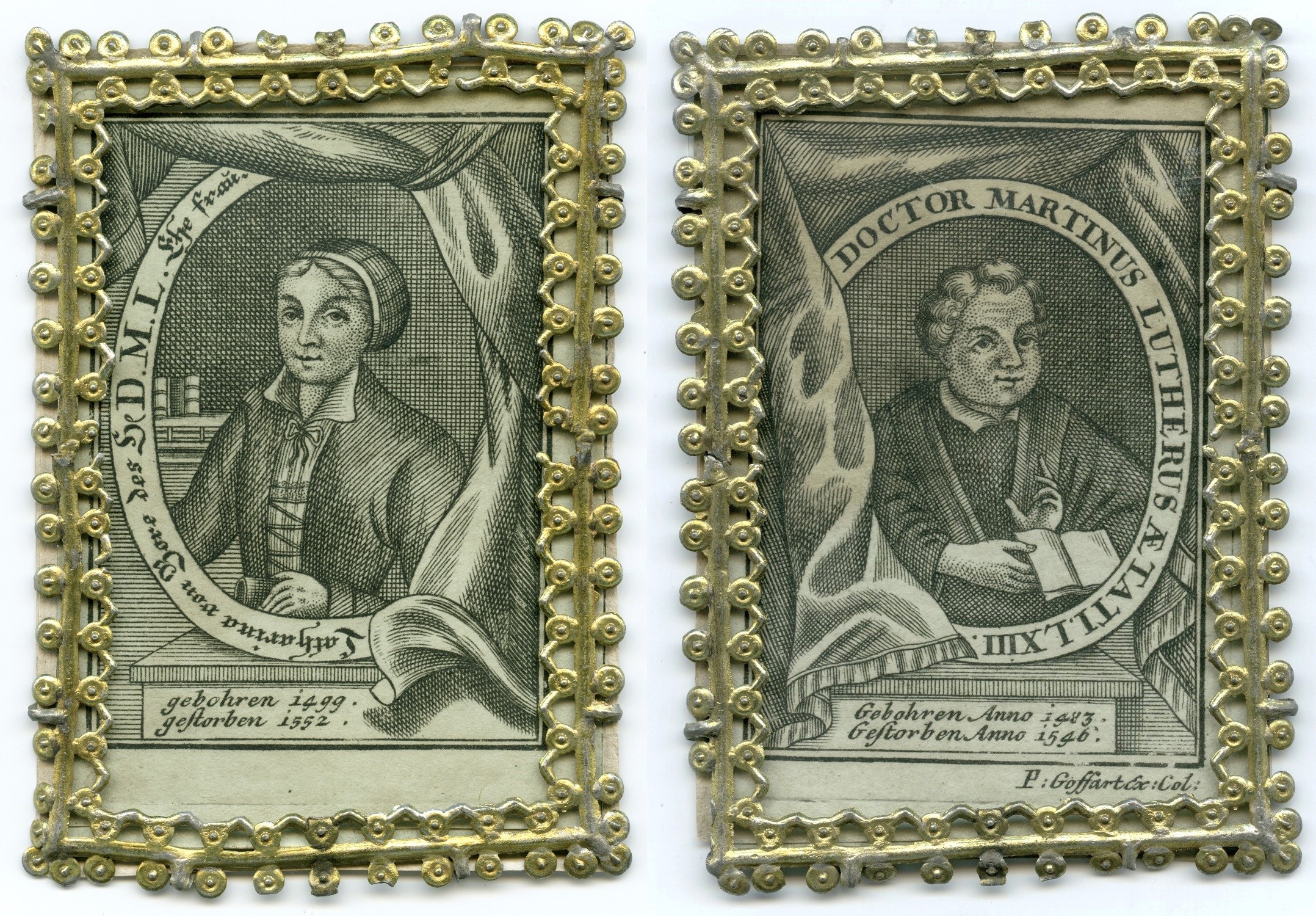
Portrait of German theologian and reformer Martin Luther (1483–1546) and portrait of his wife, Katharina von Bora (1499–1552).
18th c. Paper, woodcut.
Author and publisher Johann Peter Goffart, Cologne.
Provenance: Inherited from Dome Museum. Acquired from the Literary-Practical Citizens’ Union of Riga in 1891.
In 1525, the founder of the Reformation movement, Martin Luther, an erstwhile Augustinian monk, married Katarina von Bora, a former Cistercian nun and a follower of Luther’s reformation ideas. Luther was clearly aware of the political implications of his actions and soon launched a purposeful visual campaign to publicize the event. Portraits of the newlywed couple were published and circulated in large numbers, demonstrating the precedent of marriage. Although Luther was not the first clergyman to marry during the Reformation, it was his marriage to Katarina von Bora that became a public event, the significance of which was largely determined by the visual campaign and the wide recognition of the image of this married couple in society.
The portraits of the Luthers were created as a political tool: their mass reproduction in printmaking techniques was intended to spread the ideas of the Reformation. The representation of the marriage of the two in portraits of the couple and family portraits shaped the public perception of the ideals inherent in Protestant family life.
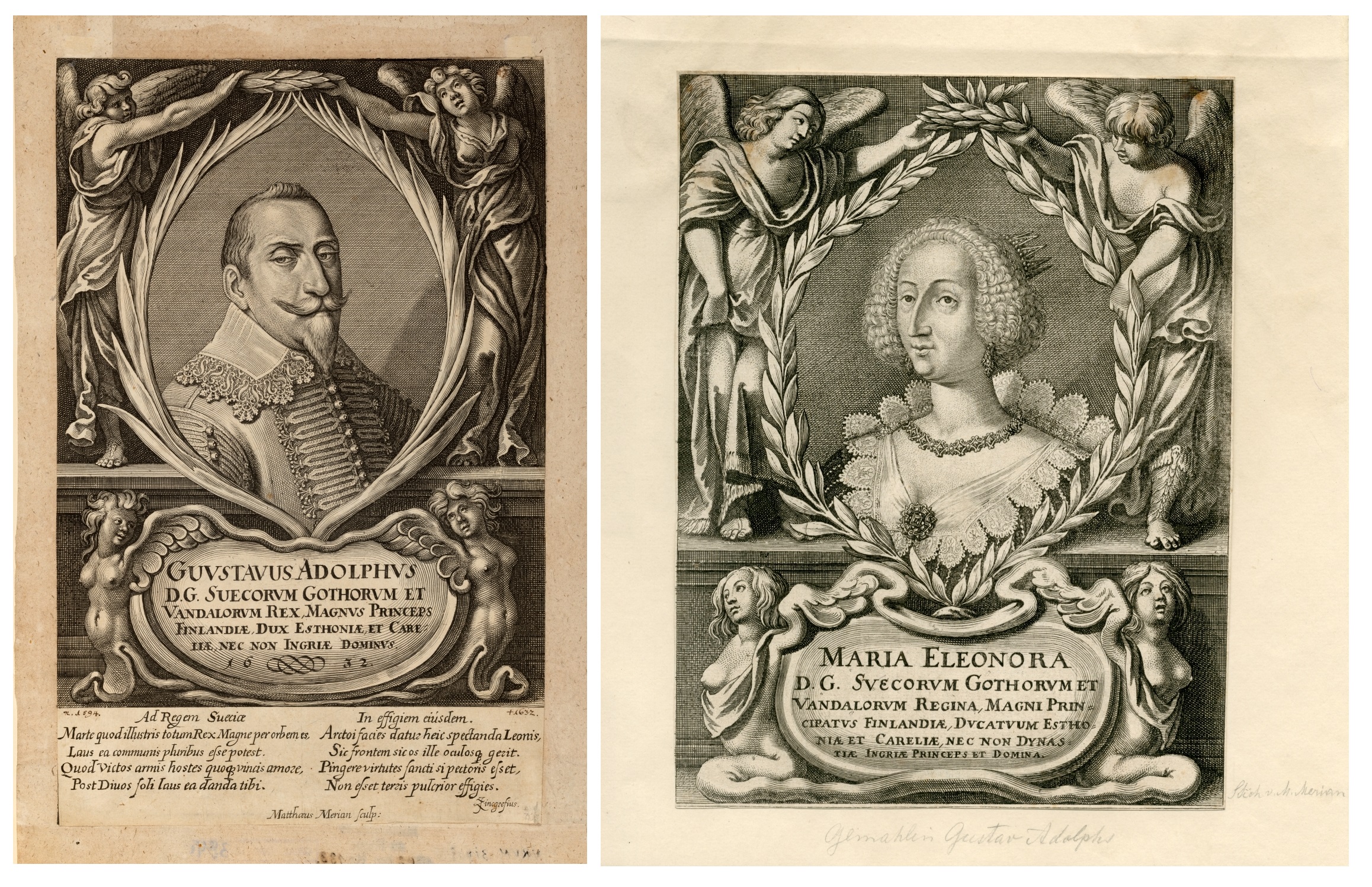
Portraits of royal couples as political instruments have traditionally been used to represent the power of ruling dynasties. The early modern period is marked by a tradition to create galleries of dignified rulers’ portraits in parade attire, whereas for the purposes of promoting the images of the rulers, the portraits were reproduced as prints.
Following the example of portraits of ruling couples, the official portraits were commissioned by representatives of local nobility and the patrician families of Riga.
Portrait of King Gustav II Adolf of Sweden (1594–1632) and portrait of Queen Maria Eleonora of Sweden (1599–1655).
1633.
Paper, copper engraving.
Author and publisher Matthäus Merian der Ältere (1593–1650), Frankfurt am Main.
Provenance: Inherited from Dome Museum.
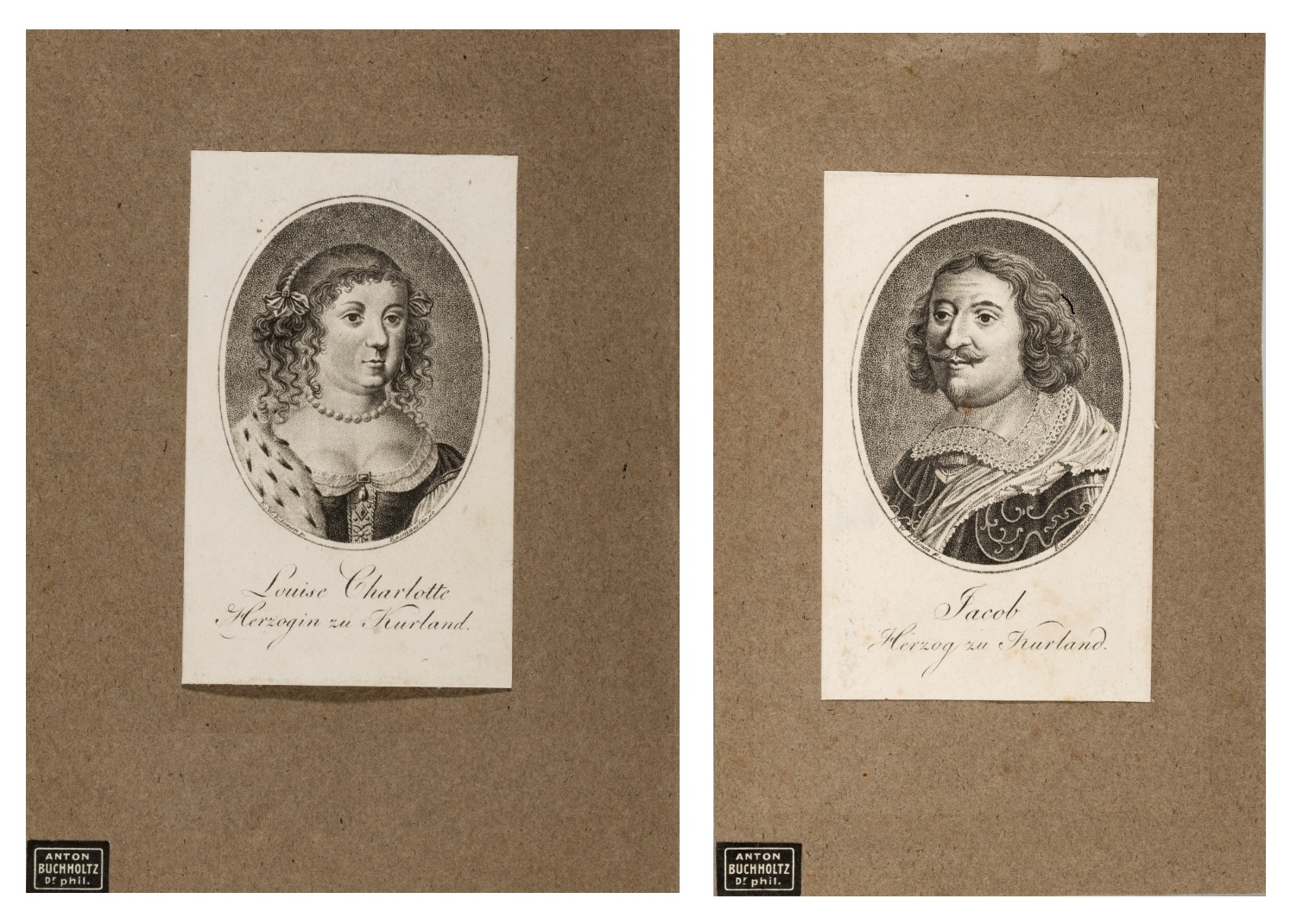
Portrait of Luise Charlotte, Duchess of Courland (1617–1676) and Jakob von Kettler, Duke of Courland (1610–1682).
Early 19th c. Paper, stipple engraving.
From the drawing by K. W. Klemm, engraver Johann Adolf Rosmäßler (1770–1821) Leipzig.
Provenance: Inherited from Dome Museum.
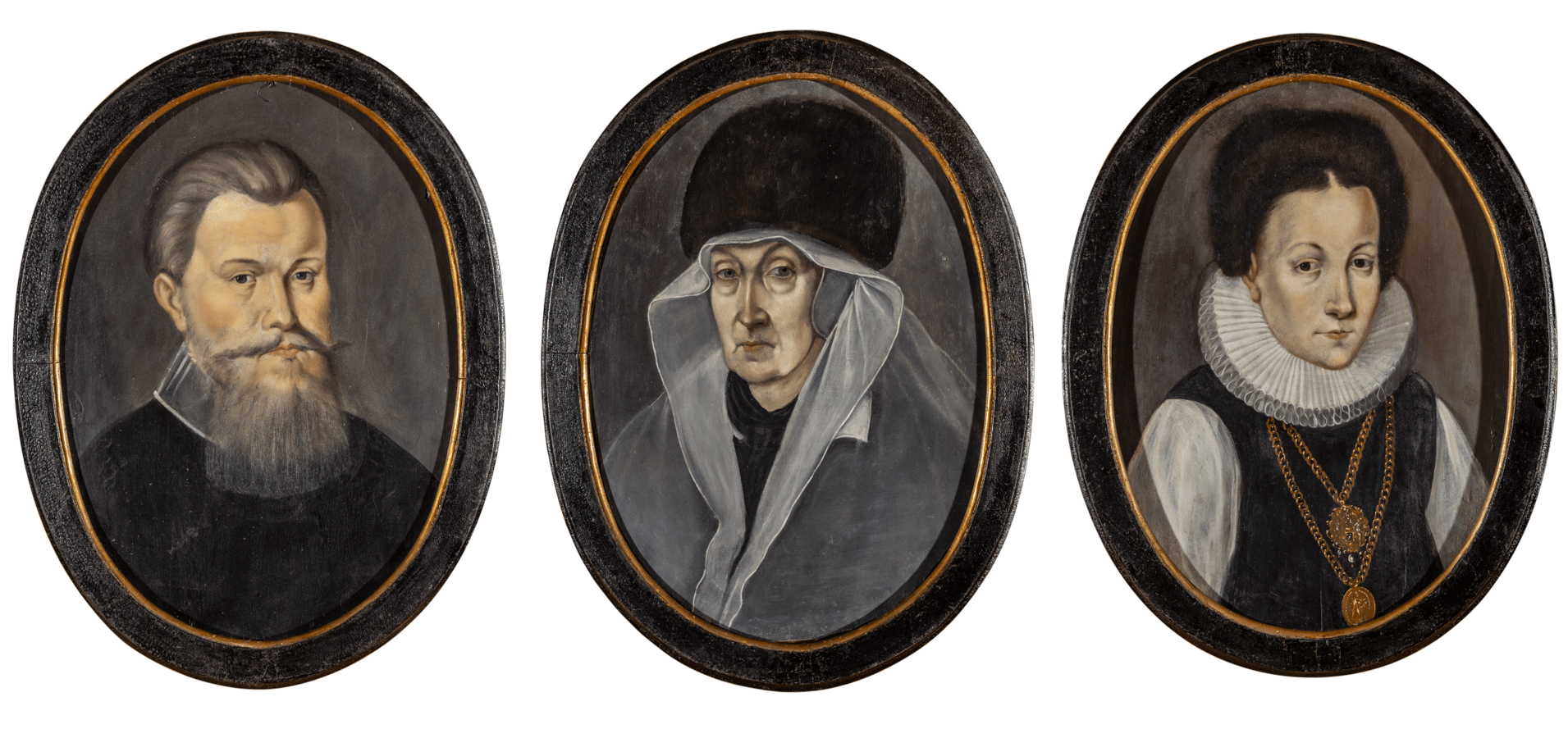
Portrait of Riga City Councillor Ludwig Hintelmann (1578–1643), portrait of his wife Katharina Hintelmann, née Lemchen (1588–1666) and portrait of their daughter.
1620s. Tempera on panel.
Unknown author.
Provenance: The paintings historically belonged to the city of Riga, in the 19th c. they were kept in the Riga City Library, from the late 19th c. – in the Dome Museum, today – RVKM.
The museum’s collection of paintings contains the portraits of members of the Hintelmann family painted in the 1620s. Ludwig Hintelmann, Riga city councillor, was born in Riga. In 1596 he embarked upon the studies of law at the University of Königsberg, continued his education at the University of Frankfurt am Oder, then travelled throughout Europe, visiting France, England and Holland, and in 1607 obtained a doctorate at Leiden University.
In 1608, Hintelmann returned to his hometown, worked in its administration and was the king’s representative in the Riga City Council. Such a commission of portraits confirmed the high social standing of Ludwig Hintelmann and his family in the society of Riga and city administration.
The museum’s collection contains several 17th century epitaph paintings – the so-called votive portraits or memorial portraits, the rendering of which is closely linked with the traditions of sacred art.
The tradition to include the portraits of secular persons, – mainly the portraits of the donors or commissioners of the particular works of art, in the painting of a religious scene placed in the interior of the church, emerged in European medieval art, continuing and developing in the art of the Renaissance and Mannerism.
The epitaph paintings stored in the museum’s collection have been created as votive portraits at the time when burials were placed inside and near churches.
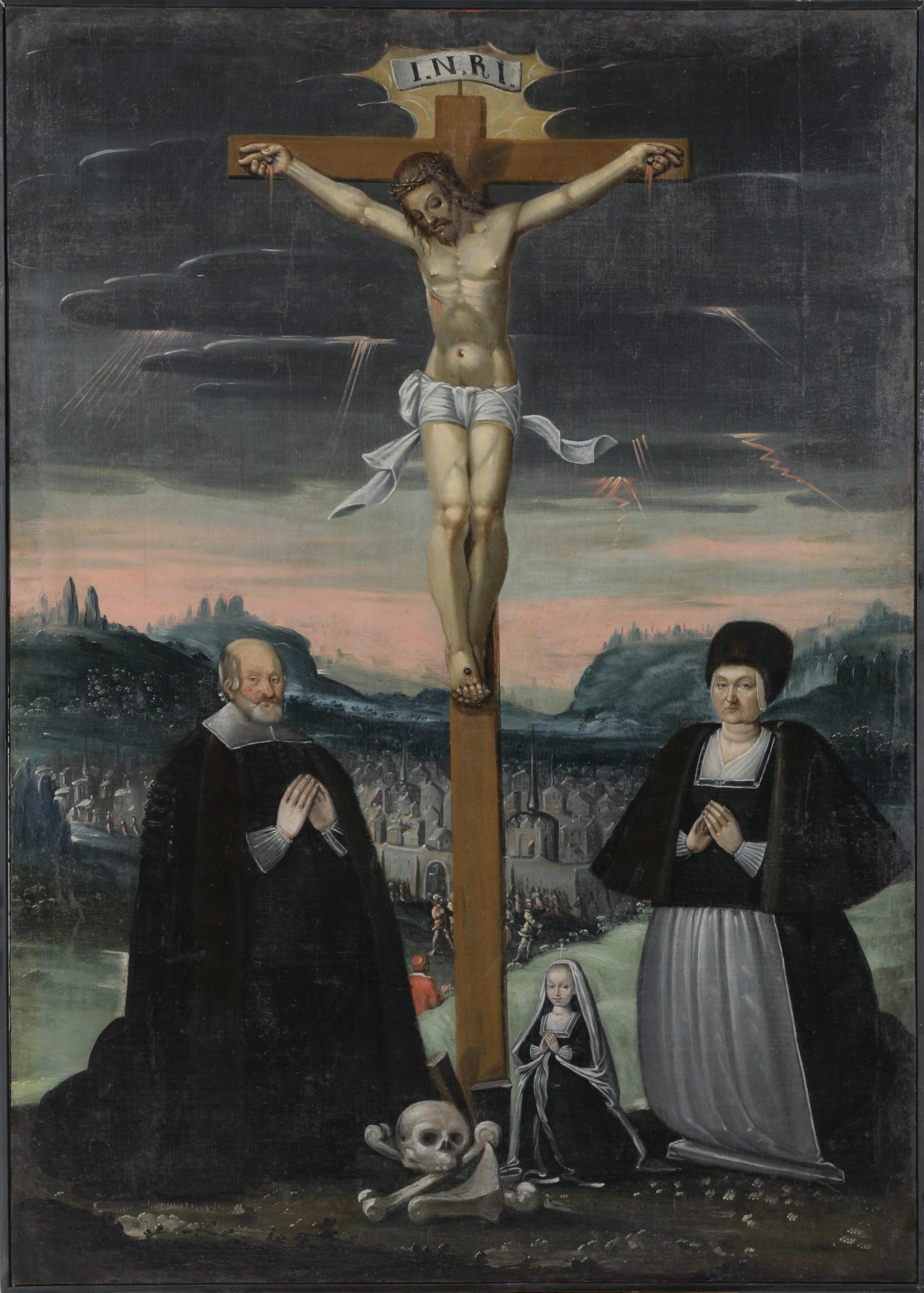
Epitaph painting of Hintelmann family.
1641. Oil on canvas.
Unknown author.
Provenance: Historically, the painting was kept in the Dome Church from 1641, while in 1786, during the renovation of the church, it was transferred to the city of Riga and for further keeping – to the Riga City Library, from the 1890 it was kept in the Dome Museum, today – RVKM.
It is known that members of the Hintelmann family were interred in the quire area of the Dome Church. The epitaph of the Hintelmann family was installed in the Dome Church as early as 1641 – during the lifetime of Riga City Councillor Ludwig Hintelmann (1578–1643) and his wife Katharina Hintelmann, née Lemchen (1588–1666), after the death of their only daughter. Their portraits are depicted in the compositional foreground of the epitaph painting, a crucifix is depicted in the centre, a skull at its foot as a reminder of the impermanence of life or “memento mori”, and in the background – a scene of the holy city of Jerusalem.
Along with the epitaph, a new pulpit was installed in the Cathedral Church in 1641, funded by the donation of Ludwig Hintelmann, and surviving to this day.
Katharina Lemchen, being a widow, donated funds to charity: the first orphanage in the city of Riga was built in 1655 on the plot of land she donated for this purpose in 1651 in Kalķu iela, where the institution continued to operate until the 19th century.
The votive portraits of the Hintelmann family intended for public display, together with the donations by both spouses to charity and their support to art and culture, contributed to the memory of their family name and their souls in many future generations of Rigans.
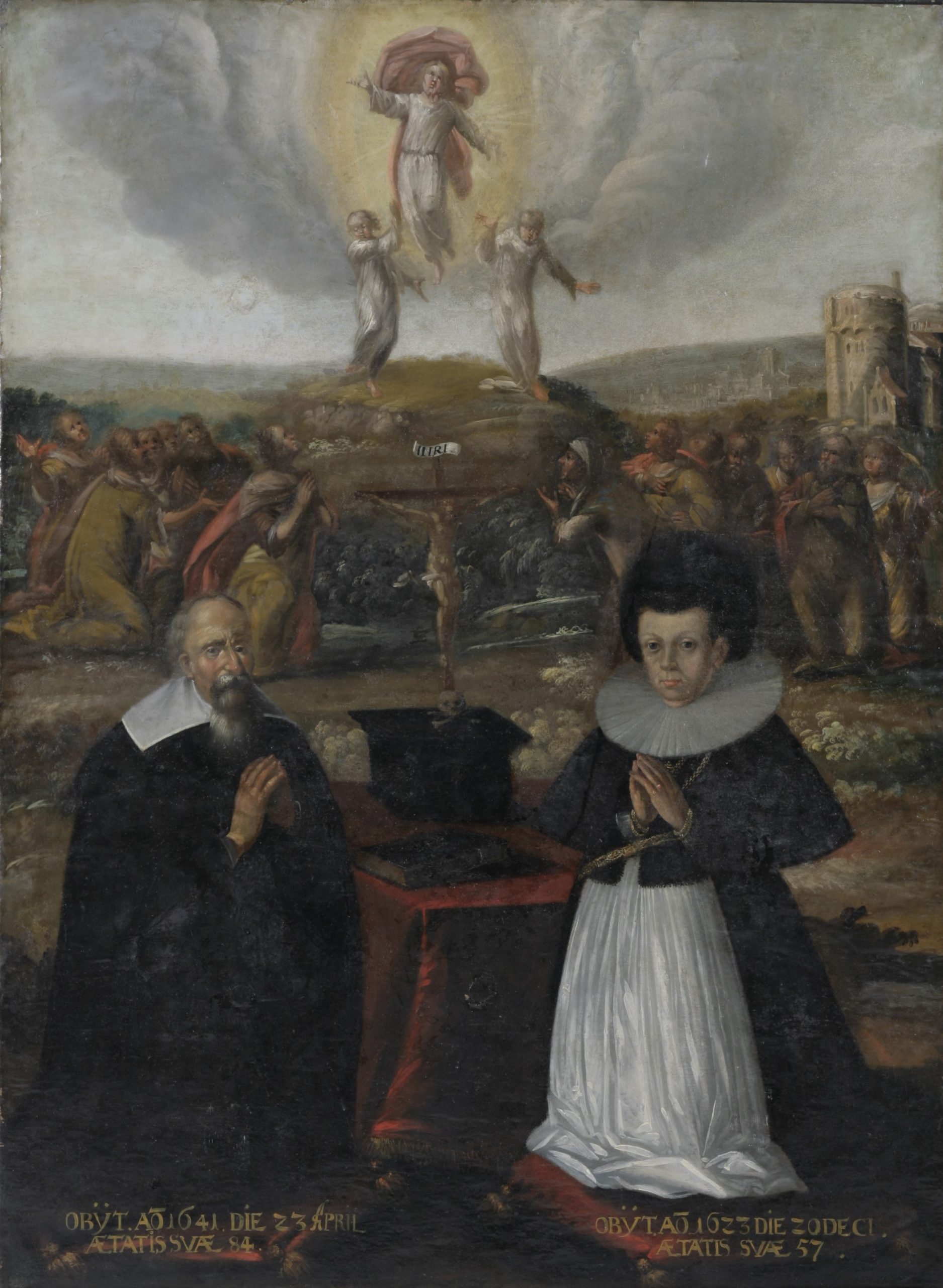
An epitaph painting of Riga Burghermeister, Magistrate (Erzvogt), Burgrave Berendt (Bernhard) Dolman (1557–1641) and Mrs. Dolman (1566–1623).
1642. Oil on copper plate.
Unknown author.
Provenance: Historically, from 1641, the painting was located in Riga St. Peter’s Church, later transferred to the city of Riga and for further keeping to the Dome Museum, today – RVKM.
The importance of the portrait genre continued to rise in the late 18th century and the first half of the 19th century. In this period, particularly popular were the privately commissioned portraits for personal use, including the portraits of couples and family portraits. While commissions of portraits in oil painting technique could still be afforded by a very few of the wealthiest society representatives, meanwhile, small-format drawings, as well as pastel and watercolour paintings, to be framed and placed in home interior, were widely sought-after.
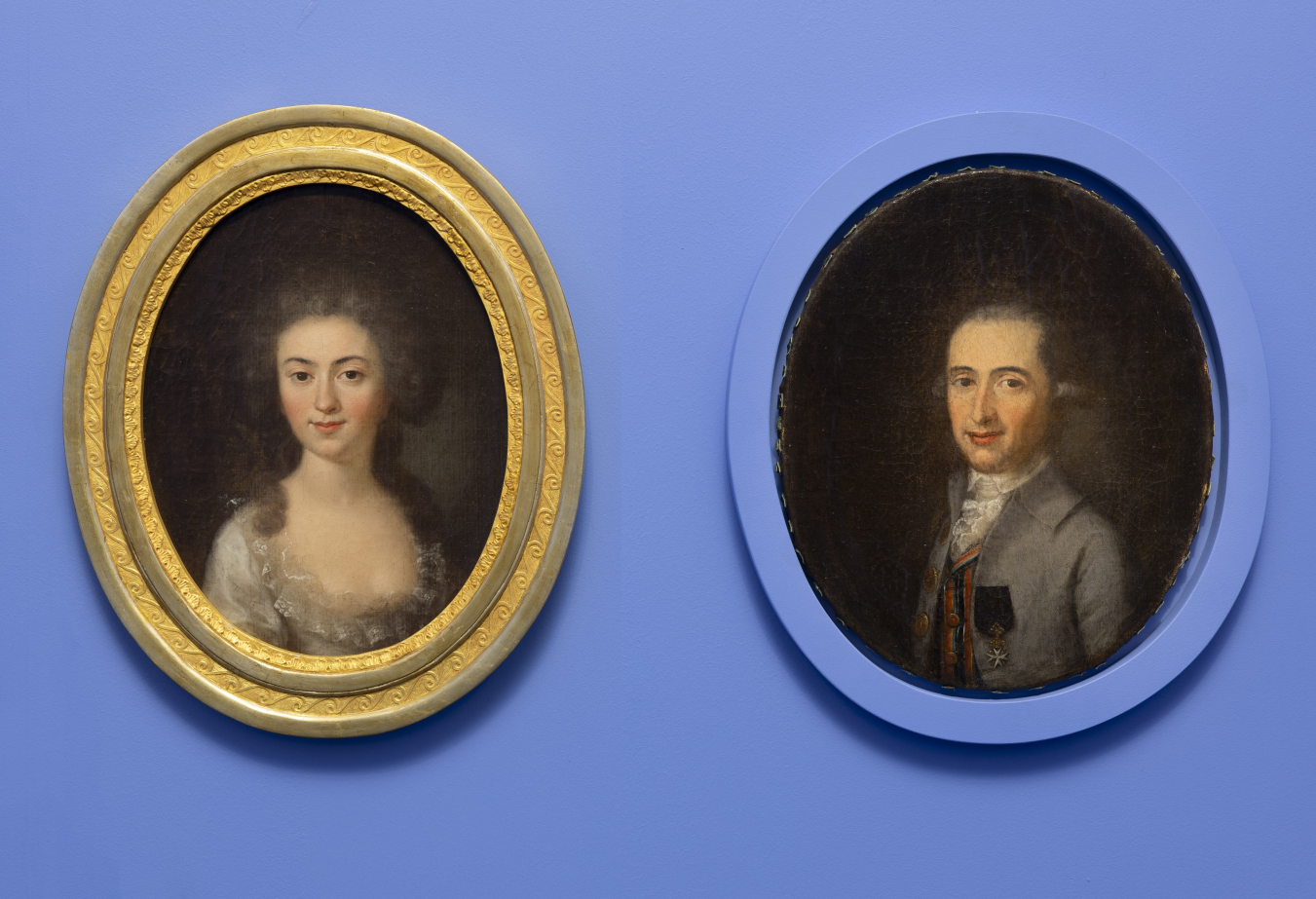
Portraits of Count Andreas von Königsfels (1750–1832) and Countess Anna Barbara von Königsfels, née du Hamel (1767–1838), owners of the Blankenfelde manor.
Late 18th c. Oil on canvas.
Unknown author.
After the paintings (1788?) of Gottlieb Schiffner (1755–1795).
Provenance: Both portraits were kept in RVKM until 1977. Subsequently, the portrait of Mrs. Königsfels is in permanent storage in Rundāle Palace Museum, while the portrait of Mr. Königsfels remains in the collection of RVKM.
Blankenfelde manor belonging to Königsfels became a landmark in the history of Baltic culture after it was twice visited by Louis XVIII with his entourage in 1804–1805. Later, in 1820, as the king of France, he bestowed the title of count to the manor’s owner Andreas von Königsfels.
The painted portraits of the Königsfels couple, stored in the Museum of the History of Riga and Navigation, lost their provenance in the post-war period: in the mid-20th century, the paintings have been registered in the museum’s inventory as a portrait of an unknown man and a portrait of an unknown woman.
In 2021, historian Edgars Umbraško carried out the attribution of the portrait of the unknown man kept in the collection of the Museum of the History of Riga and Navigation, identifying it as a portrait of Andreas von Königsfels – by analogy with Gottlieb Schiffner’s painting, which today is stored together with the portrait of Mrs. Königsfels painted by Schiffner in the Poznań National Museum. Continuing the investigation of this issue and the search for the pendant of the attributed painting in the collection of the Museum of the History of Riga and Navigation, it became clear that in 1977 the portrait of Anna Barbara von Königsfel as a portrait of an unknown woman was excluded from the main collection of this museum by the order of the Ministry of Culture and transferred to permanent storage in the Rundāle Palace Museum.
For the duration of the exhibition, the portrait of Mrs. Königsfels has been deposited from the Rundāle Palace Museum, so that after almost fifty years of separation, the two pendant portraits were displayed side by side again.
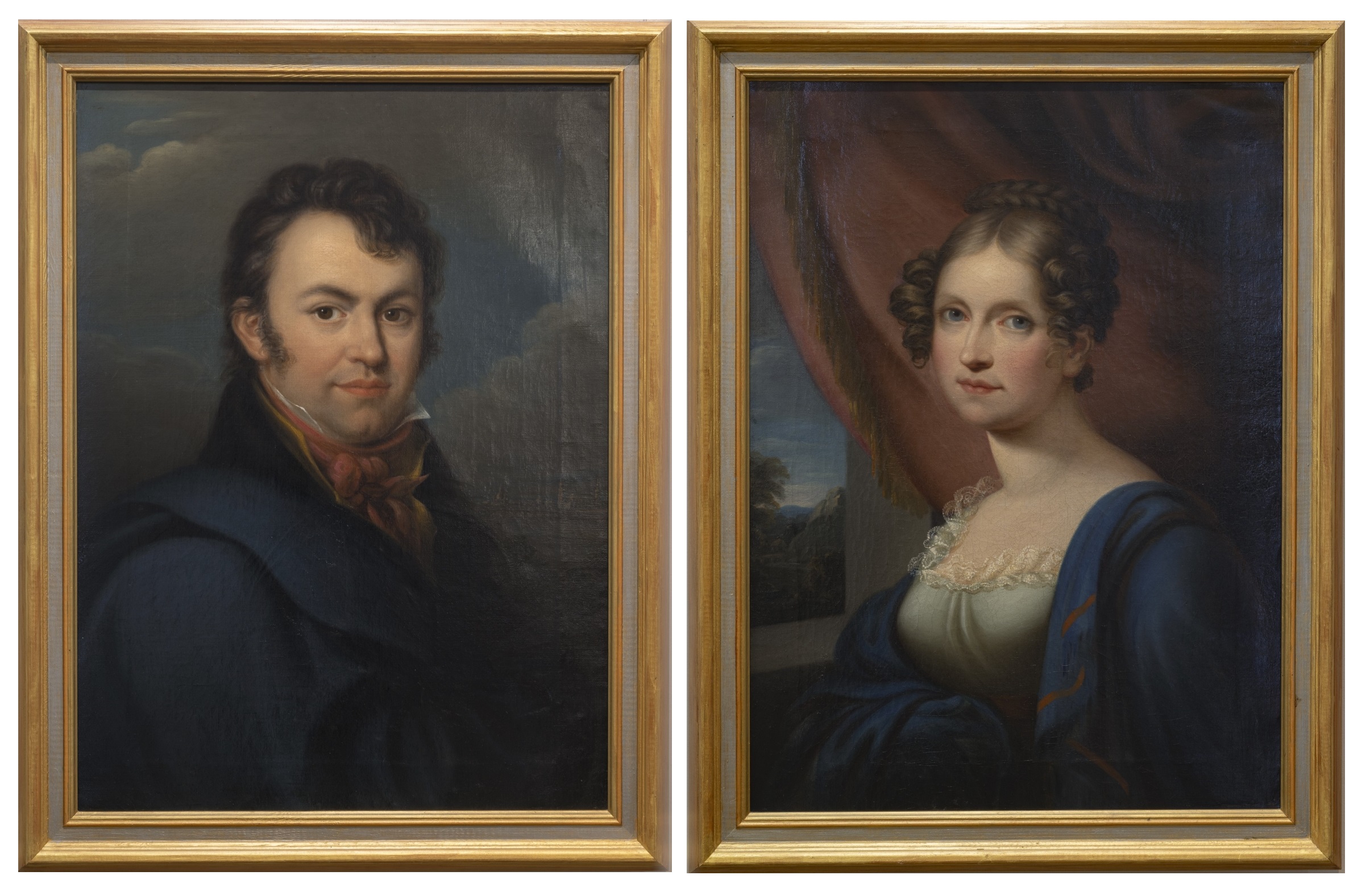
Self-portrait of the painter Ernst Gothilf Bosse (1785–1862) and his wife Wilhelmine Sophie Bosse, née Dännemark (1787–1884).
Around 1820. Oil on canvas.
Author: Ernst Gothilf Bosse.
Provenance: Inherited from Dome Museum. Acquired in 1921 from Helena Dännemark.
Ernst Gothilf Bosse, born in the family of a Riga merchant, married Wilhelmine Sophie Dännemark, the daughter of the Riga City Kapellmeister, in 1809. The couple got married in their hometown, Riga, but during their lifetime they often changed their place of residence, staying in Dorpat, St. Petersburg, Dresden and Rome during the art studies, but from the 1830s becoming permanent residents of Florence.
Ernst Gothilf Bosse painted his self-portrait and the portrait of his wife Wilhelmine Sophie Bosse around 1820 – at a time when his talent in painting portraits and historical scenes and copying the paintings of Italian old masters was well appreciated, awarding him the title of honorary member of the Academy of Saint Luke, Rome. Bose’s self-portrait is depicted against the background of the sky, with the silhouette of the city of Dresden on the horizon, while in the background of the portrait of the artist’s wife, a fragment of a typified classicist landscape is visible through the window. Both portraits remained in the family’s possession for the next hundred years, until they were transferred to the museum for permanent storage.
[Portrait of John Ellis (1798–1877), pastor of the Riga Anglican Church, and portrait of his wife].
1840s. Oil on panel.
Unknown author, England.
RVKM acquisition in 2021 from the legacy of the writer and collector Stanislav Rubinchik (1940–1981).
The portraits of John Ellis, the first pastor of the Riga Anglican Church, and his wife are new acquisitions of the museum’s collection of a high historical value. The desire to display them inspired this exhibition and the choice of its theme. Upon incorporating these paintings into the collection, the persons depicted therein were identified due to the fact that the two paintings have been kept together until today – as an inseparable couple. In the composition of the portrait of Mrs. Ellis, a letter addressed to Mrs. Ellis is shown on the table next to the books: with the naked eye, a miniature inscription in English “Mrs. Ellis” can be barely discerned on the folded page of the letter, enabling to establish the identity of the persons depicted in both portraits of the couple.
The wooden bases were made by the Brown family enterprise in Holborn, London, and the “BROWN / HOLBORN” imprint on the reverse side enables the dating of the paintings: according to the catalogue of the National Portrait Gallery, London, the bases with this type of maker’s mark were used between 1839 until 1849 or slightly longer.
John Ellis was born in London, received his master’s degree from Oxford University, then worked as an assistant pastor at St. John’s Church in East London. In 1829, he arrived in Riga and for the next 44 years was the pastor of the Anglican congregation of Riga.
The obituary published in the Riga newspaper noted that Ellis returned to London at the end of his life and was laid to rest there, but that he loved Riga as the city where he spent almost his entire working life and considered it his second homeland. Riga Anglican Church, built in 1857–1859, bears a testimony of Ellis’s time in the city of Riga.
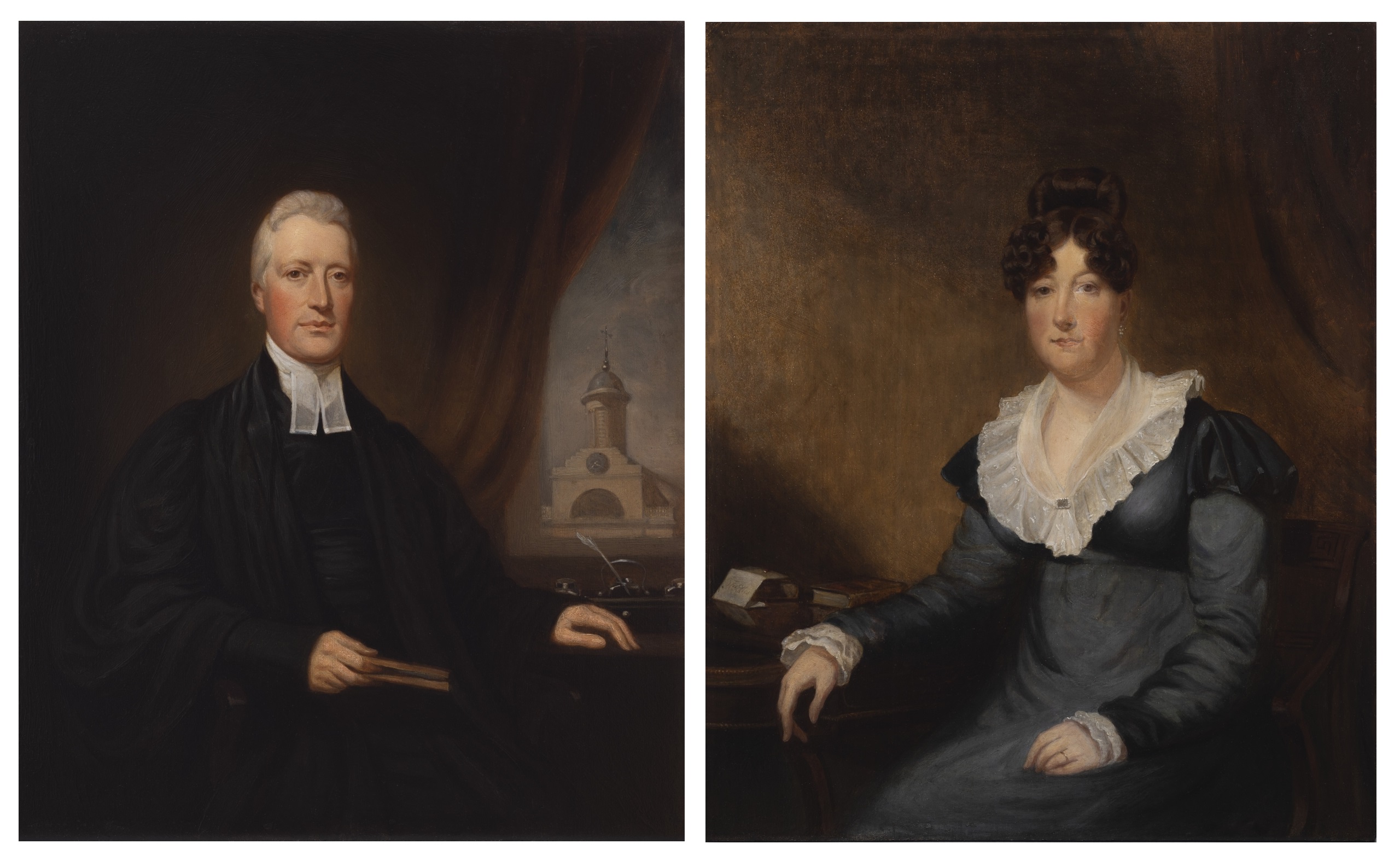
Portrait of a young woman and portrait of a young man.
19th c. Pastel on paper.
Unknown author.
Provenance: [Inherited from Dome Museum].
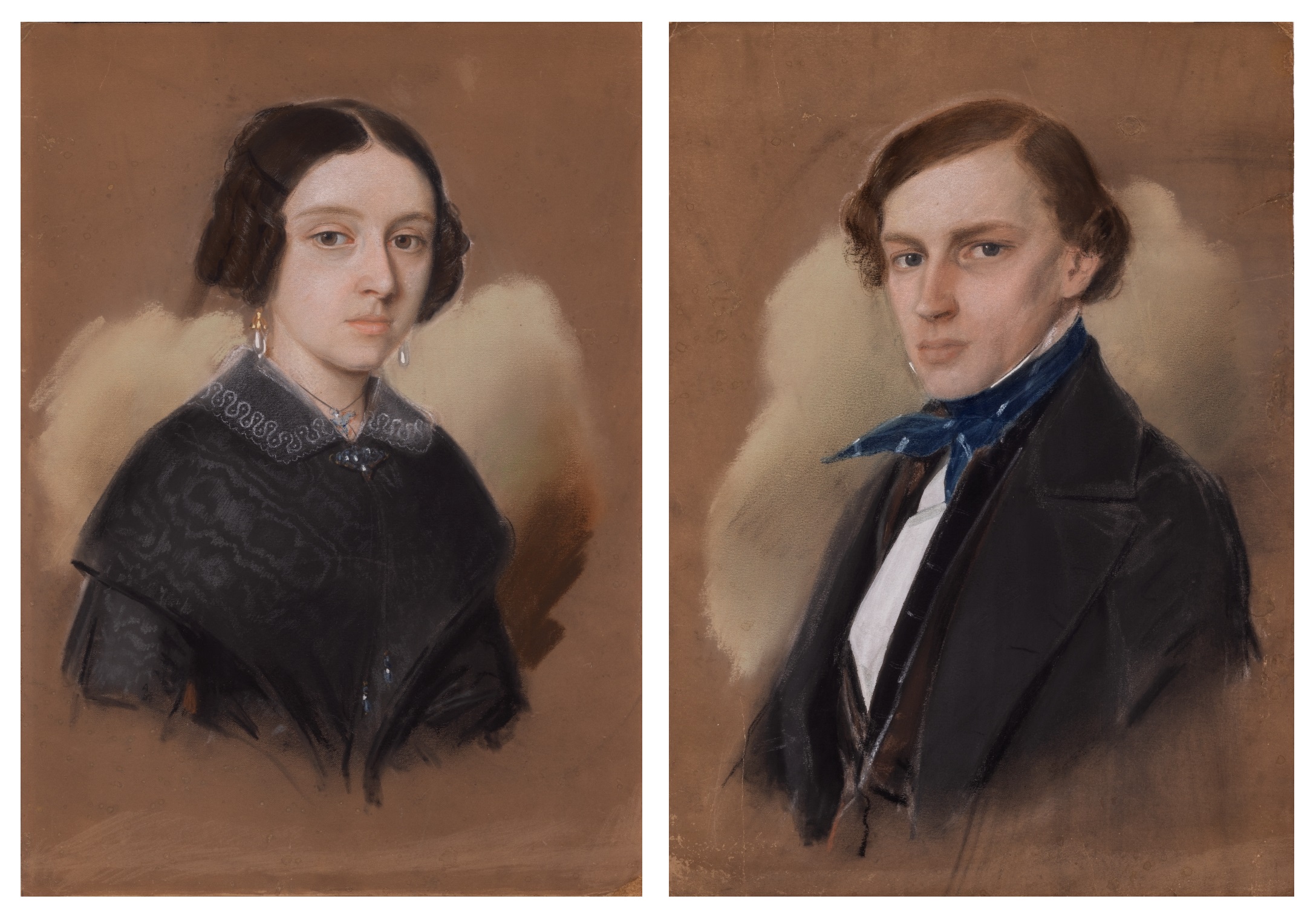
The silhouette became the most affordable form of portraiture in the late 18th century and the first half of the 19th century. As a type of miniature portrait, it was popular for personal use, and also well suited for reproducing. Portraits made in this particular technique – dark, monochrome, flat images of the subject’s profile – drawn on a light background or created in the appliqué technique – acquired the name of silhouettes in the second half of the 18th century: in 1759, when Étienne de Silhouette became the French Controller-General of Finances in the conditions of austerity economy, this inexpensive way of portrait-making became popular in France, borrowing its name from the surname of that official.
In 1780s, silhouette workshops abounded in France and other parts of Europe, and the artists who specialized in making silhouettes within a short visit made a profile drawing of the client’s shadow, achieving a visible likeness. Creation of silhouette portraits, which was relatively easy, quick and cheap, in the late 18th century and early 19th century became a widely sought-after and extensively offered portraiture technique in many parts of Europe, also in Riga and elsewhere in the Baltics, where several local artists specialized in making silhouettes.
Information about the availability of such a portrait service in Riga episodically appeared in local newspapers since 1780s, announcing the visits of various foreign artists to the city. Silhouette-making on glass, depicting the silhouette on a gilded background, was especially mentioned as a modern technique: such portraits became fashionable in Riga, as evidenced later by the information collected in the catalogue of cultural and historical exhibition held in Riga, 1883, as well as particular examples of art objects in the museum’s collection (in this exhibition, the silhouettes made in the ink drawing and appliqué technique are augmented by silhouettes made on glass, displayed in the chest of drawers).
Silhouettes were popular in portraiture until the rapid spread of photography: a role played by silhouette workshops in the mid-19th century was taken over by salon photographers’ workshops.
Portrait of Riga merchant Carl George Hackmann (1735–1803) and portrait of Mrs. Hackmann.
Last quarter of 18th c. Ink and watercolour on paper.
Unknown author.
Provenance: Inherited from Dome Museum.
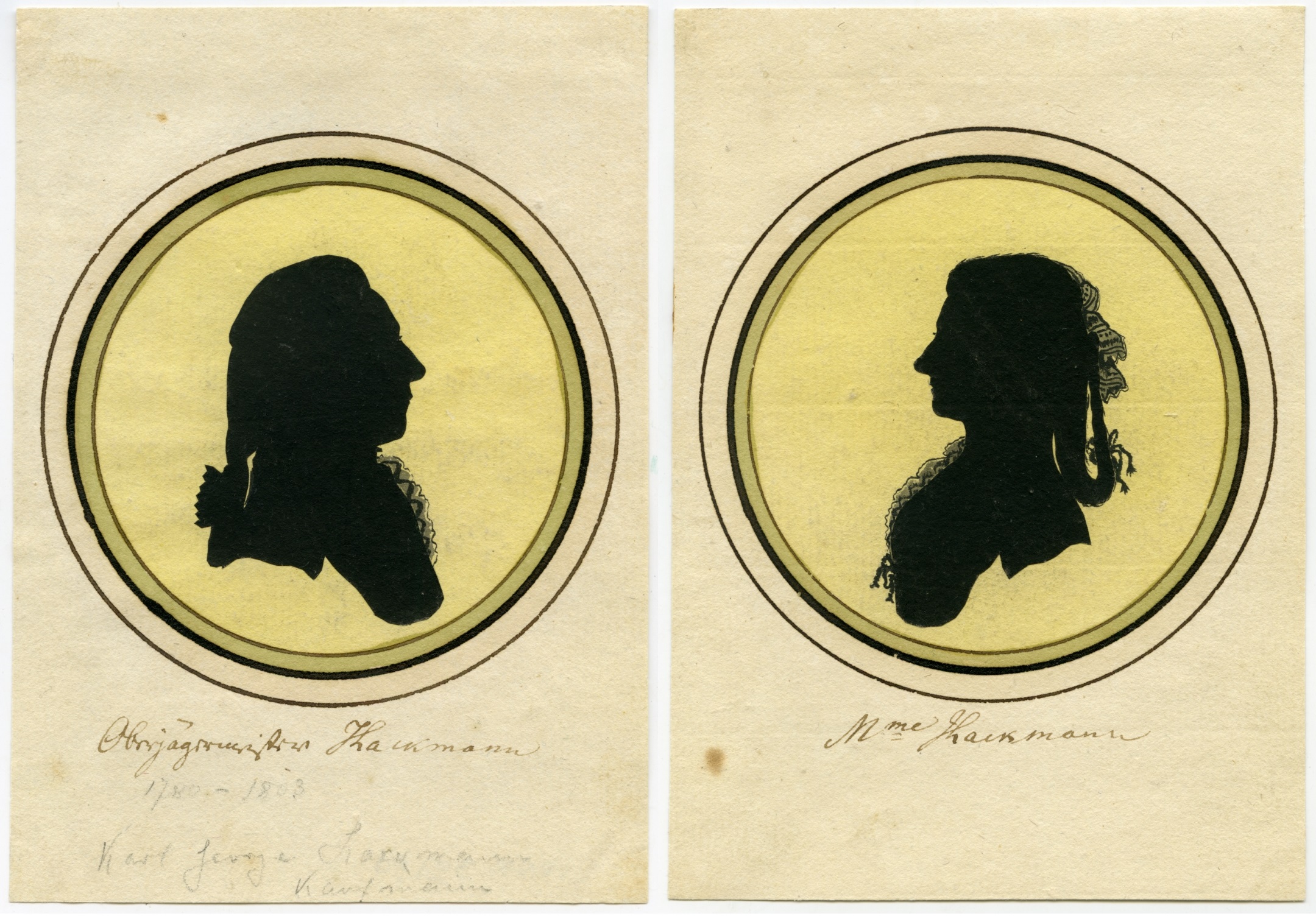
Portrait of Staff Surgeon Jacob Johann von Reichard, owner of Holdre Manor (Hollershof), and portrait of Mrs. Von Reichard, née Mühe.
Last quarter of 18th c. Ink and watercolour on paper.
Unknown author.
Provenance: Inherited from Dome Museum.
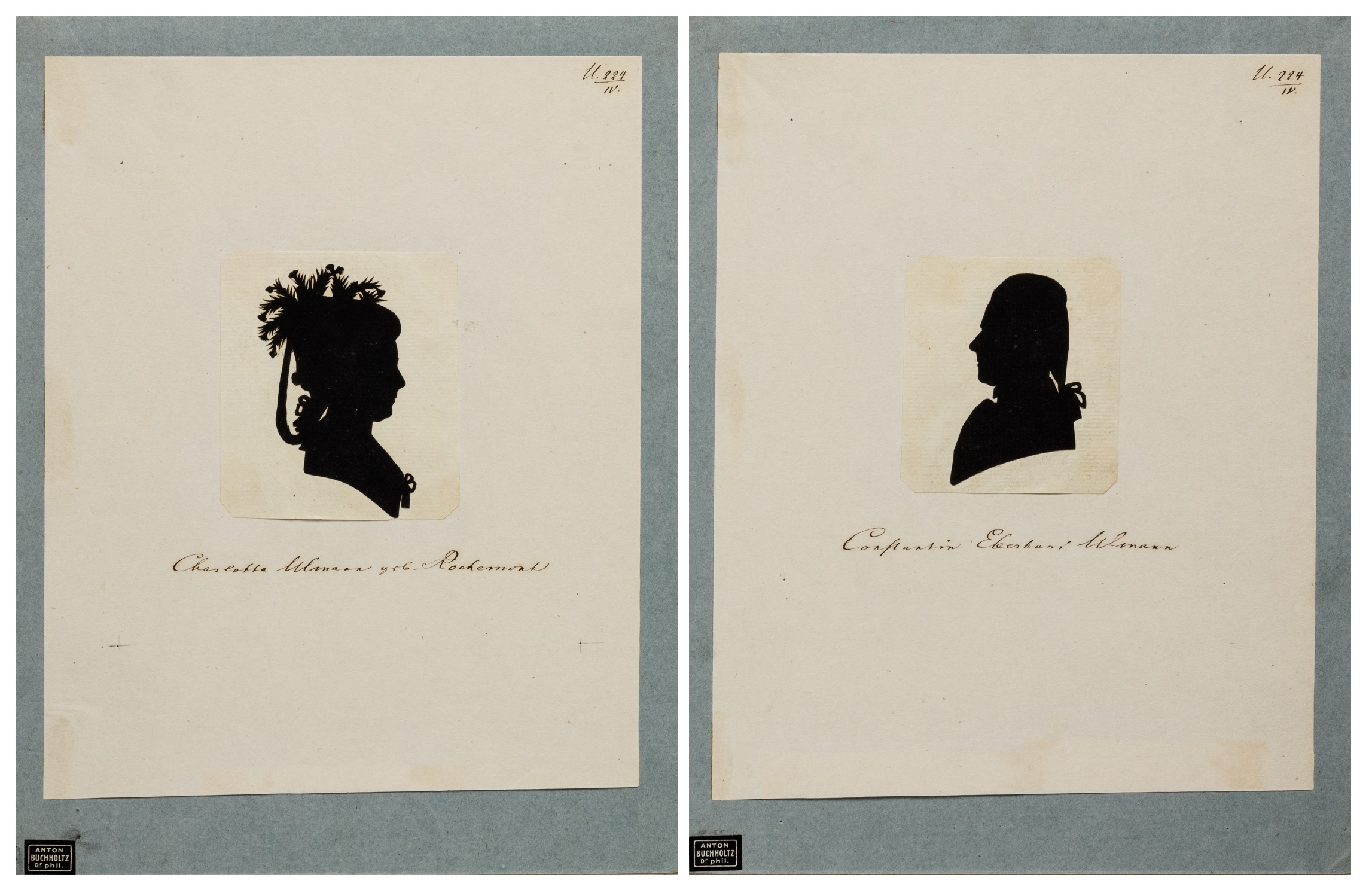
Portrait of Charlotte Ulmann, née Rochemont, and portrait of Constantin Eberhard Ulmann.
Last quarter of 18th c. Ink on paper.
Unknown author.
Provenance: Inherited from Dome Museum.
At the second half of the 18th century and the first half of the 19th century, in Riga and the Baltics, as elsewhere in Europe, there was a fashion for portrait miniatures made with gouache, watercolour or tempera on ivory. Portraits of couples and family portraits made in this way were usually framed and hung on the wall, or placed on furniture, complementing the interior of the family home. Notably, even those portraits that were in the private space, in one way or another, were aimed at society – at a very narrow and select circle of viewers.
On the other hand, very small portraits painted on ivory, designed as medallions, were often commissioned and created for personal ownership or with the purpose of gifting them to someone: the small format of the portrait medallion had a special meaning as a gift – it could indicate a particularly close, deeply personal relationship between the depicted person and the recipient of the portrait.
In the mid-19th century, with the increasing role of photography in the production of portrait images, miniature painting, which heretofore had enjoyed immense popularity, gradually lost its acclaim, and so did silhouette-making.
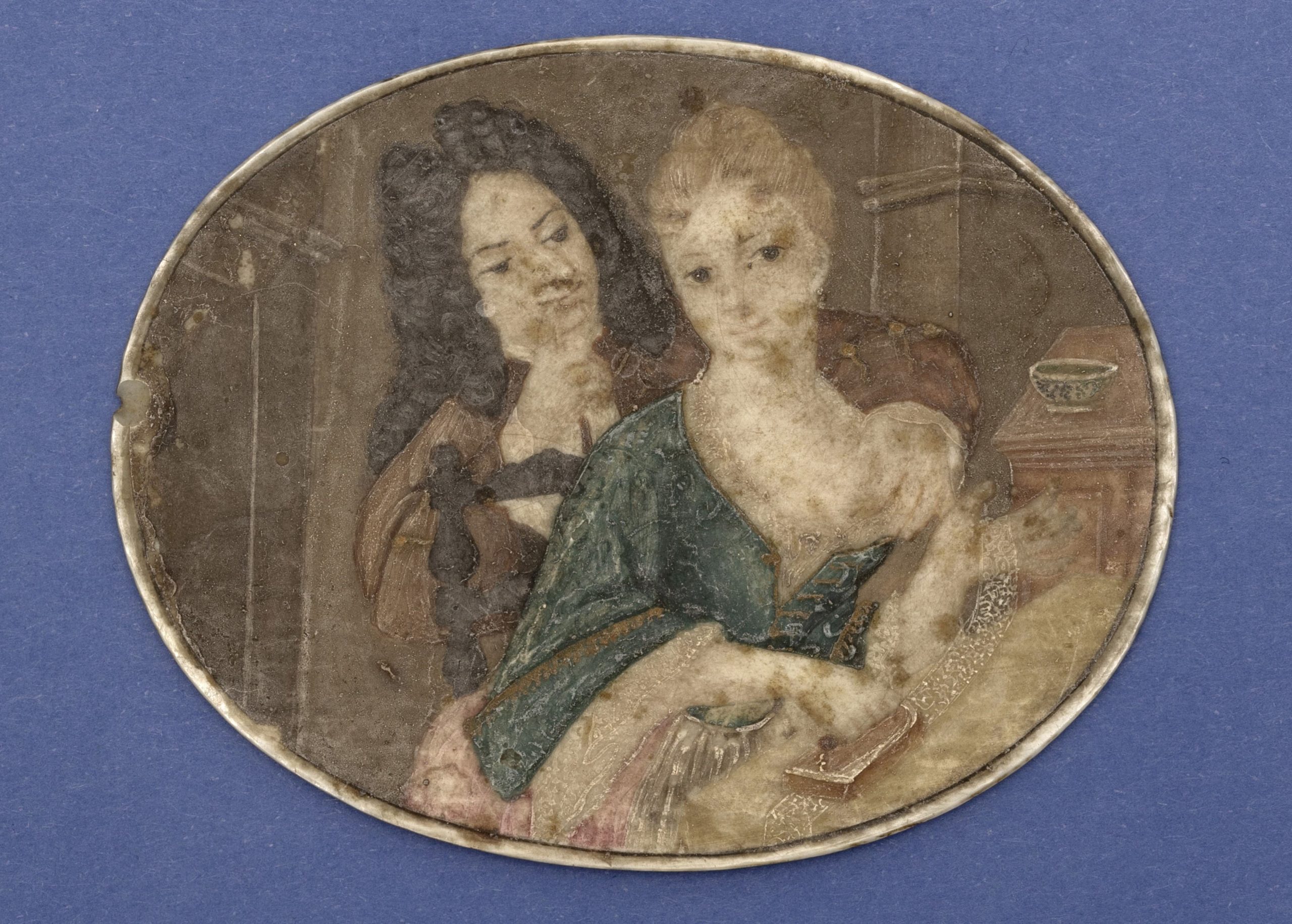
Presser of lace with an admirer.
Dutch genre painting with a seduction scene.
17th c. Watercolour and tempera on ivory.
Unknown author.
Provenance: Inherited from Dome Museum: acquired in 1897 as a gift from the estate of Georg Berkholz (1817–1886).
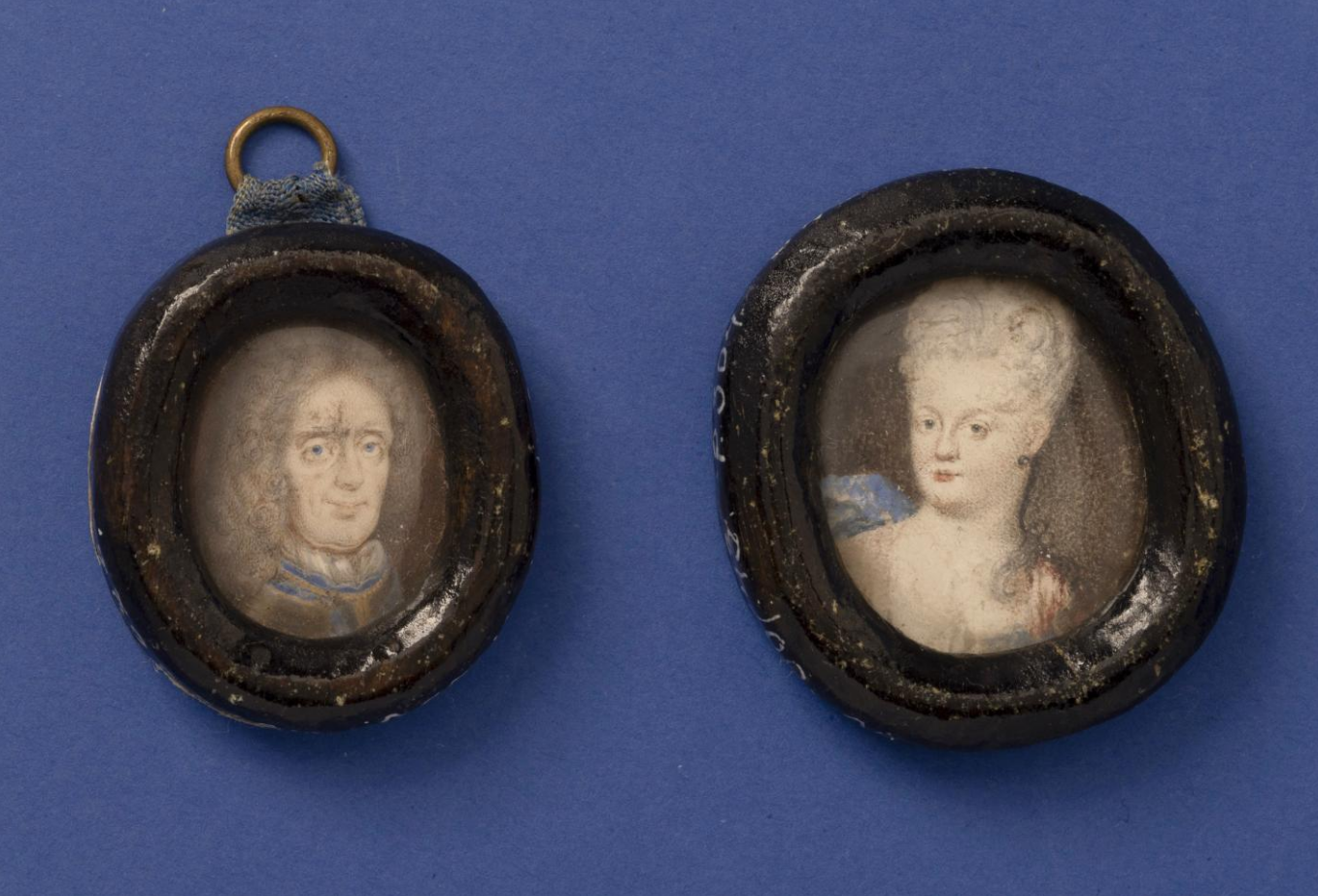
Portrait of an unknown man and portrait of an unknown woman.
1st quarter of 18th c. Tempera on ivory.
Unknown author.
Provenance: Inherited from Dome Museum. Acquired in 1914 as a gift from Riga apothecary Eduard Reitzberg.
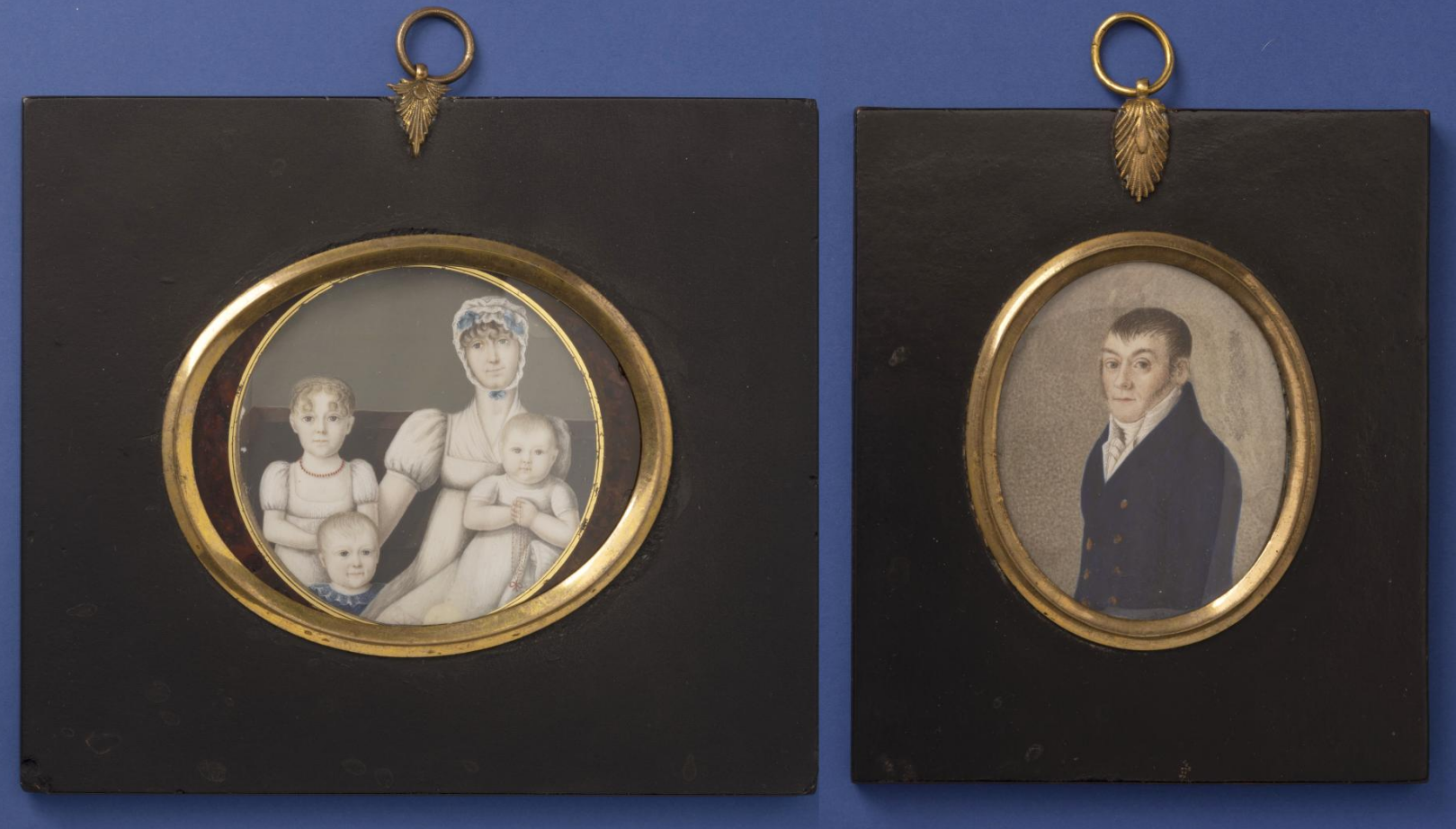
Portrait of merchant and banker Christian Wilhelm Kagell (1775/1776–1818), portraits of his wife Anna Elisabet Kagell, née Mallm (1780–1852) and their children.
1806 and 1807. Gouache on ivory.
Unknown author.
Provenance: The paintings were received in the holdings of Dome Museum in 1916 as a gift from Dr. med. Heinrich von Hedenström (1872–1931). Portrait of Mr. Kagell in the 20th c. was transferred to permanent storage in the Museum of Foreign Art, today – Latvian National Museum of Art, while the portrait of Mrs. Kägel and the children is still kept in RVKM.
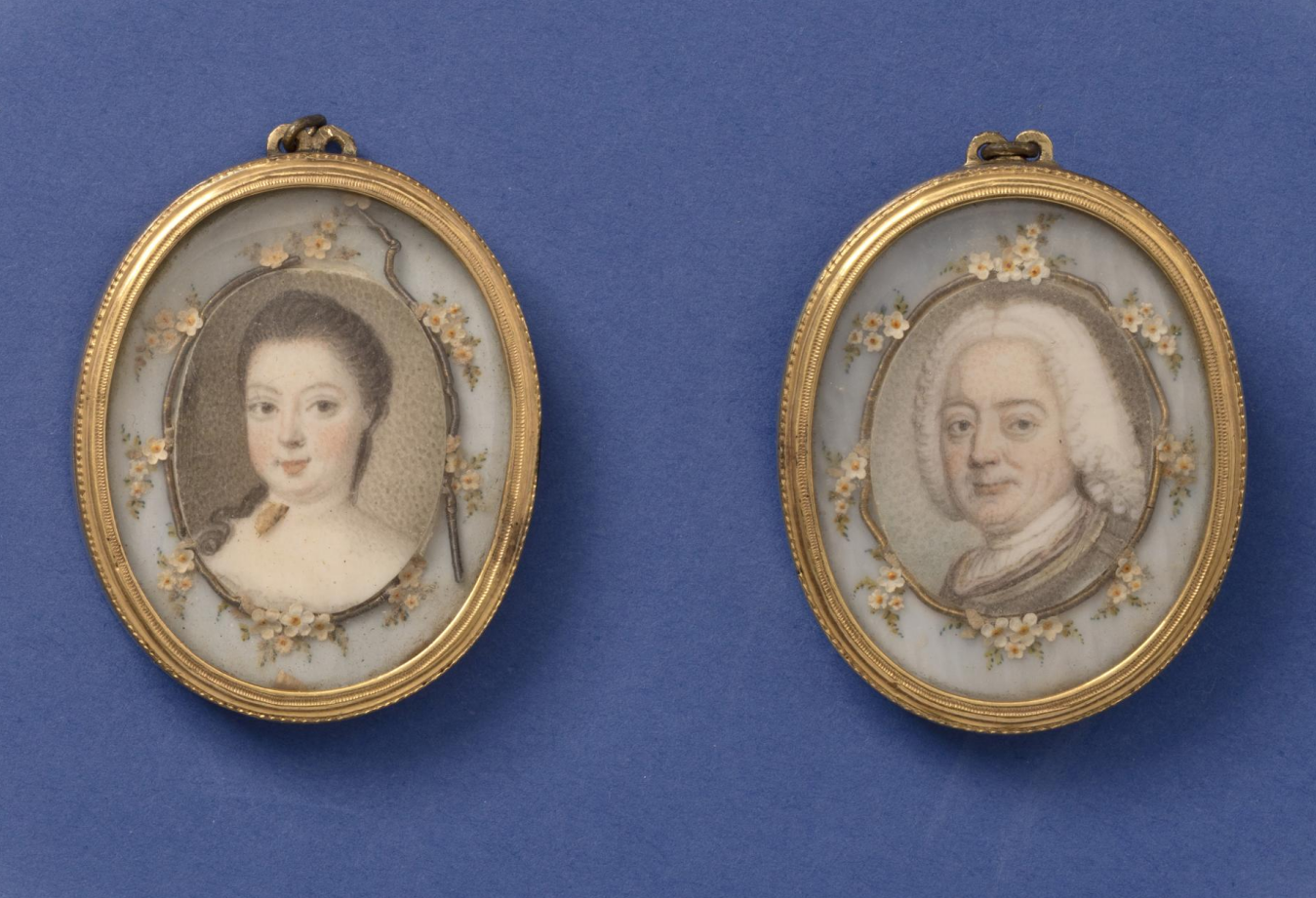
[? Portrait of Baron Johann Albrecht von Korff (1697–1766,) and portrait of an unknown woman].
Mid-18th c.
Ivory, oil.
Unknown author.
Provenance: Inherited from Dome Museum. Acquired in 1895, by purchasing them with funds allocated by Livonian knighthood.
The portraits of couples in the museum’s collection, which are included in this exhibition, mostly depict married couples: this condition stems from the purposes and representational functions of the portraits themselves. However, privately commissioned portraits intended for personal use could reveal different models of the couple’s relationship. The private nature of such portraits most often determined their subsequent keeping in private ownership.
The later owners of this pair of medallions were very likely well aware of the identity of the individuals depicted in the two miniatures, but did not reveal it out of respect for their privacy. The identity of the persons depicted in the miniature paintings is unclear. In the late 19th century, when they were included in the museum’s collection, there was only an indication that the portraits represent a couple from the Von Korff family.
Evidently, the portraits had a deeply personal meaning: the pendant portraits are painted on ivory plaques and surrounded by forget-me-not blossoms, symbolizing true love. Giving such a medallion to another person and keeping one would mean promising the other person faithfulness, affirming respect and love.
Studying the portraits of 18th century that are known today and depict the men of Von Korff family, it is possible to identify the gentleman depicted in the miniature as Baron Johann Albrecht von Korff. He was born in the Reņģe manor (Rengenhof) in Kurzeme, after studies at the University of Jena established a career as a diplomat at the Russian court, and in the 1740s he served as an envoy to Denmark, where, while staying in Copenhagen, he founded the first Danish masonic lodge. Baron Von Korff was single.
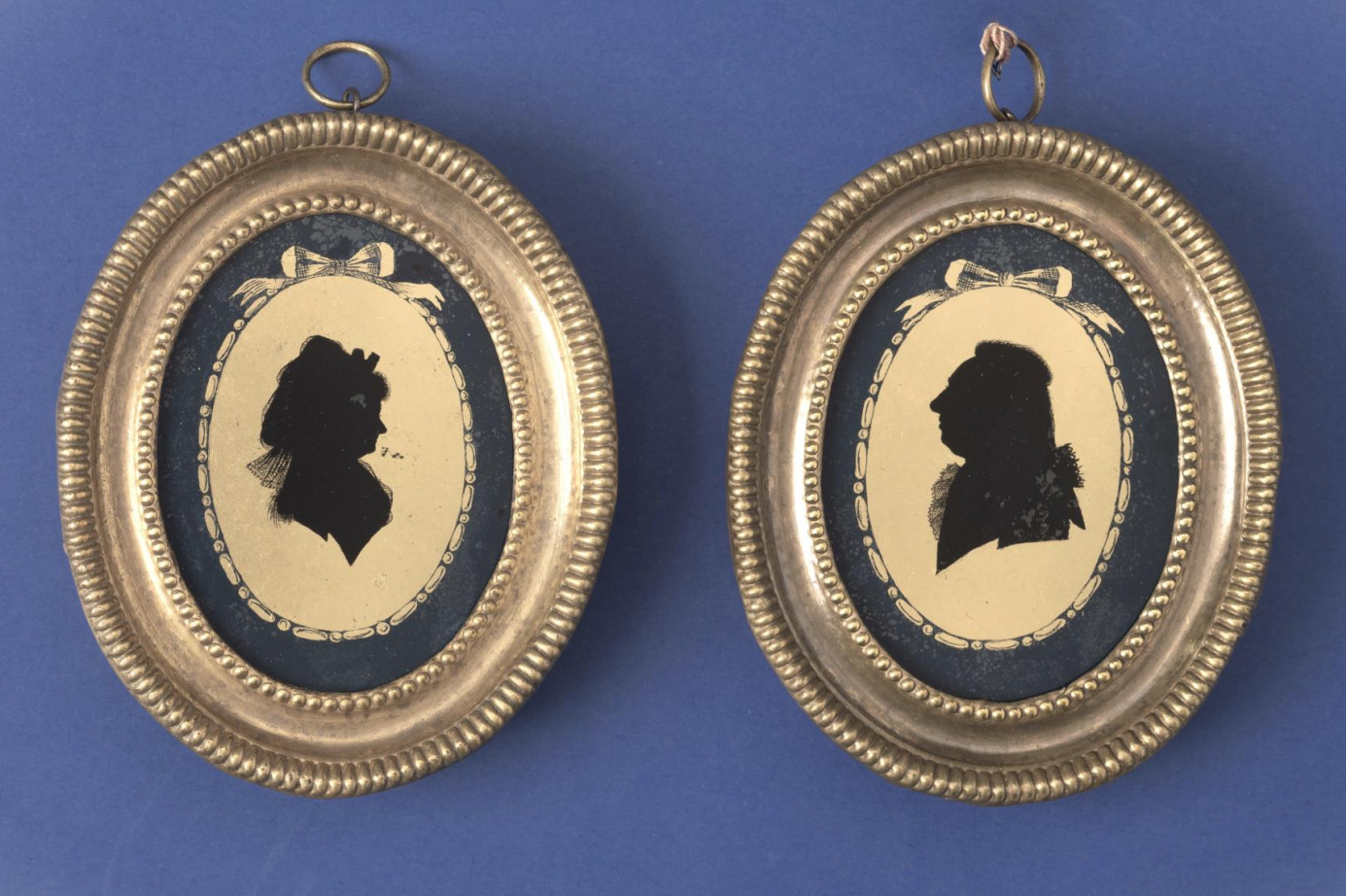
[Portrait of Thomas Zuckerbecker (1768–1826), Riga merchant, Dutch consul, freemason, overseer of Riga lodge “Small World” (“Zur kleinen Welt”), and portrait of his wife Eva Maria Zuckerbecker, née Berens (1772–1817)].
Early 19th c. Gilding and ink on glass.
Unknown author.
Provenance: Inherited from Dome Museum. Acquired in 1930 as a gift from the estate of Elisabeth Schönfeldt, née Schwartz.
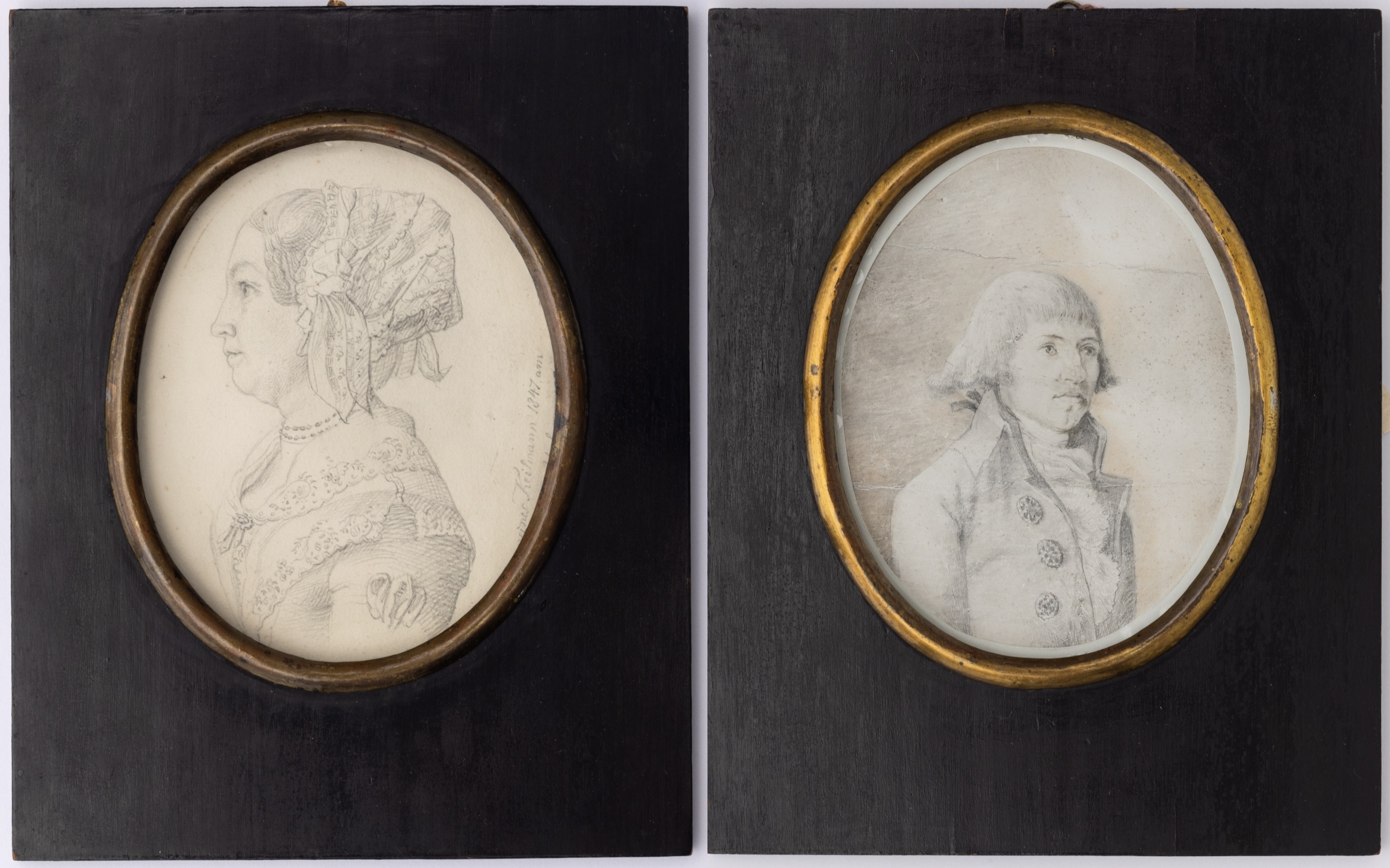
Portrait of Christina Friederika Wevell von Krüger, née Zuckerbecker (1765–1834) and portrait of her second husband, Heinrich Wevell von Krüger.
19th c. Pencil on paper.
Unknown author.
Provenance: Inherited from Dome Museum. Acquired in 1930 as a gift from the estate of Elisabeth Schönfeldt, née Schwartz.
Christina Friderika, daughter of Thomas Zuckerbecker (1730–1795), a large-scale merchant of Riga, member of the Brotherhood of Blackheads and Collegiate assessor, after her two divorces, founded the Zuckerbecker family legacy to honour her father’s memory. In fulfilment of her testamentary will, the legacy of the Zuckerbecker family granted annual benefits to the Riga City Orphanage for more than hundred years – until the conclusion of the legacy in 1939.
The range of portraits originating locally in the 19th century is dominated by portraits created in printmaking techniques, mainly lithography, copper, and steel engravings. In printmaking techniques, portraits were made with the aim of reproducing and distributing these portraits in society, consequently, the persons depicted in them were well-known or otherwise prominent in the society of that time. Portrait images of couples made in printmaking techniques, based on original drawings or executed after paintings, and, in the middle and late 19th century also after photographs, for representational purposes could supplement public announcements of couple’s marriage or other notable events, or were published for commemorative purposes.
Portraits in printmaking techniques were commissioned by the local nobility, state and local government institutions, and various public organizations: the depictions of pairs include estate owners, heads of educational institutions and public organizations, and, as usual, representatives of the ruling elite.
Unlike portraits created for private use, the portraits made for publication purposes were subject to official censorship.
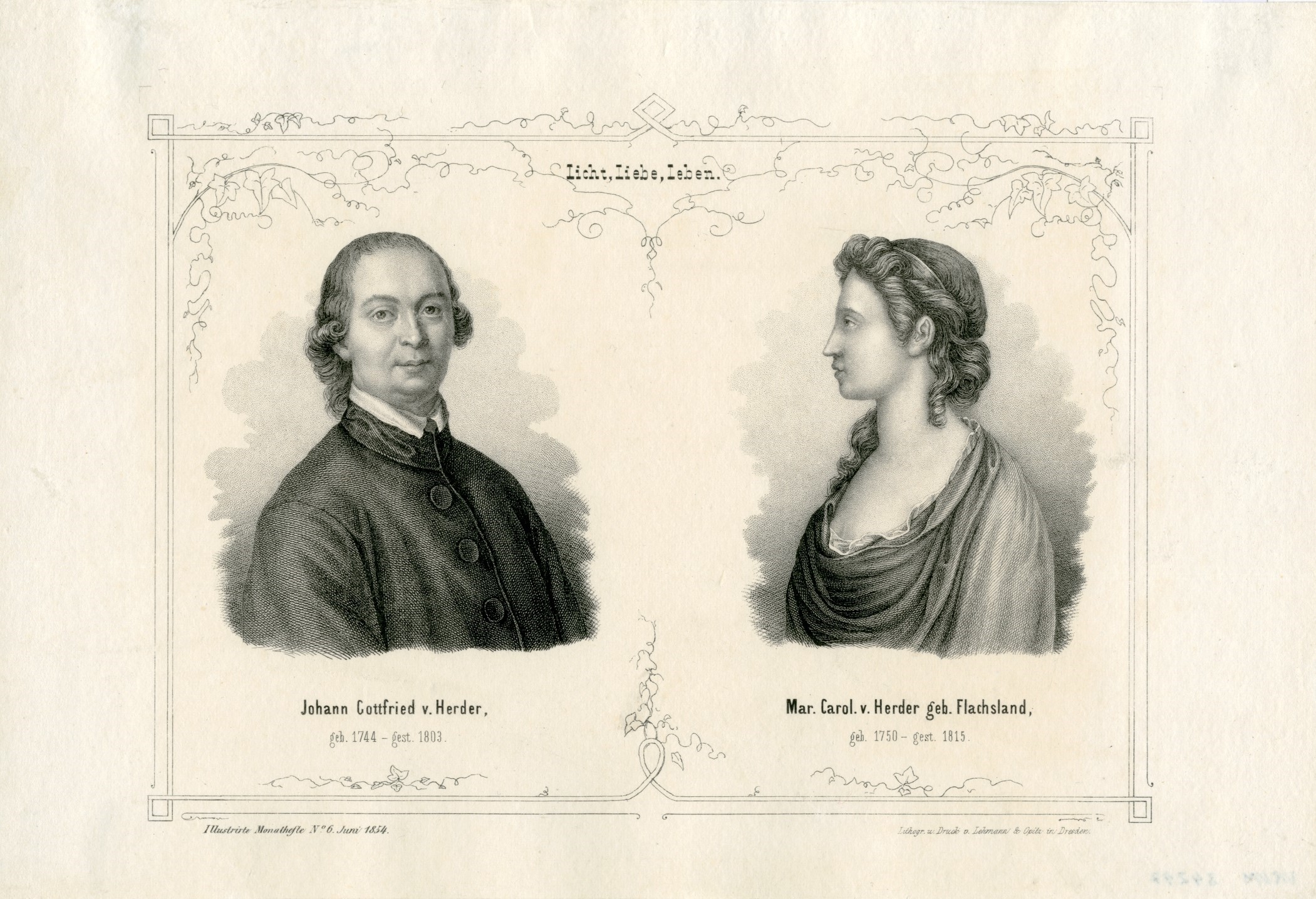
Portrait of the German philosopher, theologian and poet Johann Gottfried von Herder (1744–1803), and portrait of his wife, Maria Karoline von Herder, née Flachsland (1750–1815), the compiler and editor of his works.
Paper, lithograph. Portrait reproductions printed in 1854, Dresden.
Provenance: Inherited from Dome Museum.
Johann Gottfried von Herder, the German enlightener and initiator of German romanticism, lived in Riga from 1764 to 1769, and worked as an assistant to the city librarian, an assistant teacher at the Dome School and an assistant pastor of the St. Gertrude and Jesus churches, and joined German intellectual community in Riga.
A few years later, in 1773, in Darmstadt, Herder married Maria Karoline Flachsland, who at that time was part of the circle of philosophers in Darmstadt. During their lifelong marriage, she was an editor of Herder’s works.
This portrait of Herder was painted in 1775 by Anton Graff (1736–1813) to form a pair of portraits with the idealized portrait of Maria Karoline Flachsland, which had been painted as a bridal portrait by Johann Ludwig Strecker (1721–1799) before the couple’s marriage in 1773.
The pair’s portraits are crowned with Herder’s life motto written in German: “Light. Love. Life.”
Portrait of Count Christoph Johann Friedrich von Medem, Jeannot Medem (1763–1838), owner of the Eleja (Elley) manor, and portrait of Maria Elisabeth Luise von Medem, Countess of Elley, née Countess von der Pahlen (1778–1837).
Turn of 18th and 19th c. Paper, stipple engraving.
Unknown author.
Provenance: Inherited from Dome Museum.
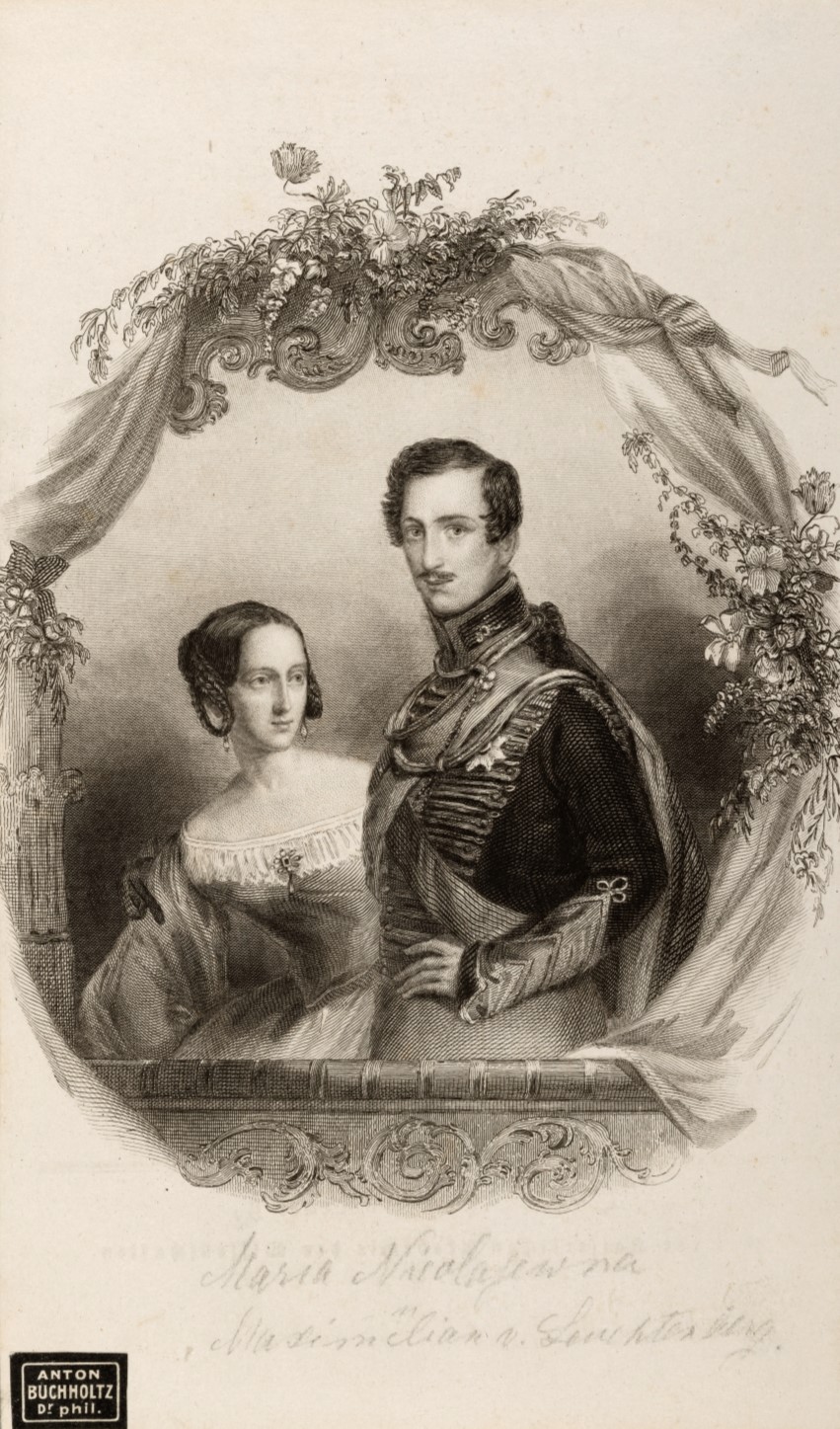
Portraits of Duke Maximilian vol Leuchtenberg (1817–1852) and his bride Maria Nikolaevna Romanova (1819–1876).
1839. Paper, engraving.
Unknown author.
Provenance: Inherited from Dome Museum.
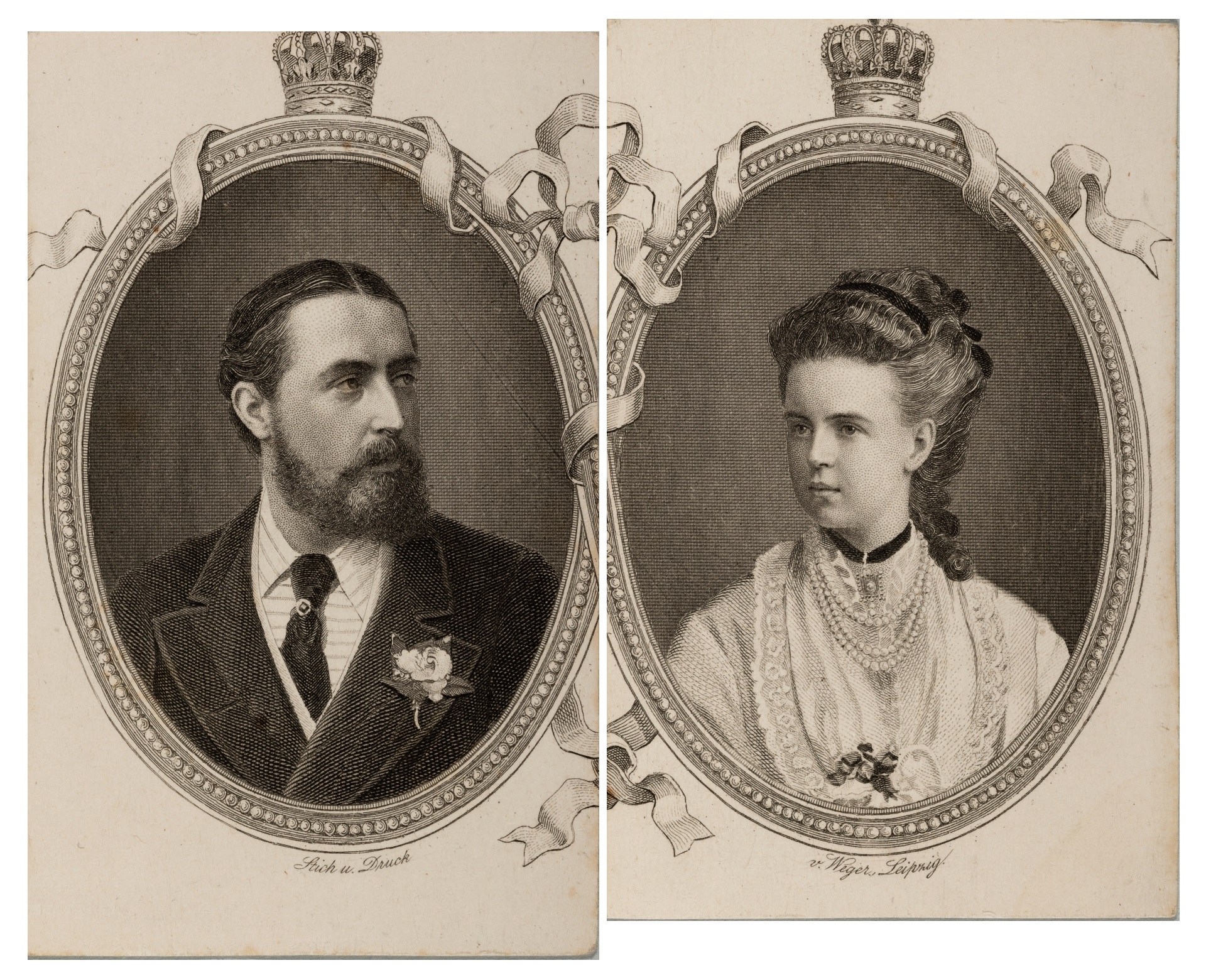
Portrait of Alfred, Duke of Edinburgh (1844–1900) and his bride Maria Alexandrovna (1853–1920).
1874. Paper, copper engraving.
Engraved and printed by August Weger (1823–1892) in Leipzig.
Provenance: Inherited from Dome Museum.
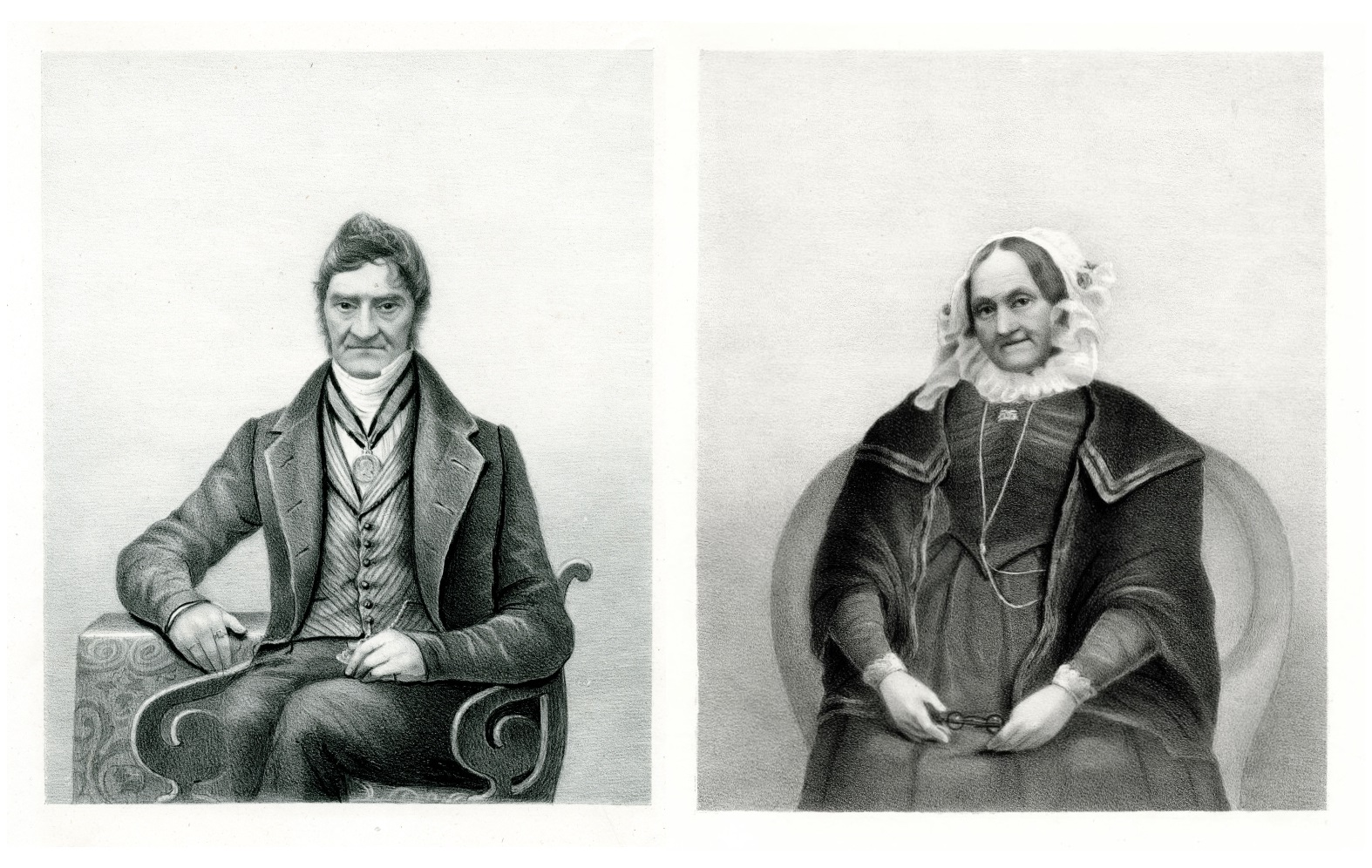
Portrait of David von Wiecken (1779–1852), Riga town councillor, assessor of the city treasury collegium, Alderman of the Great Guild, deputy of the Livonian Landtag and founder of the manor buying firm, and his wife Johanna Gottlieb von Wiecken, née Zimmermann (1784–1850).
1840s. Paper, lithograph.
Lithographed by Karl Ferdinand Deutsch (1806–1881) in Riga.
Provenance: Inherited from Dome Museum.
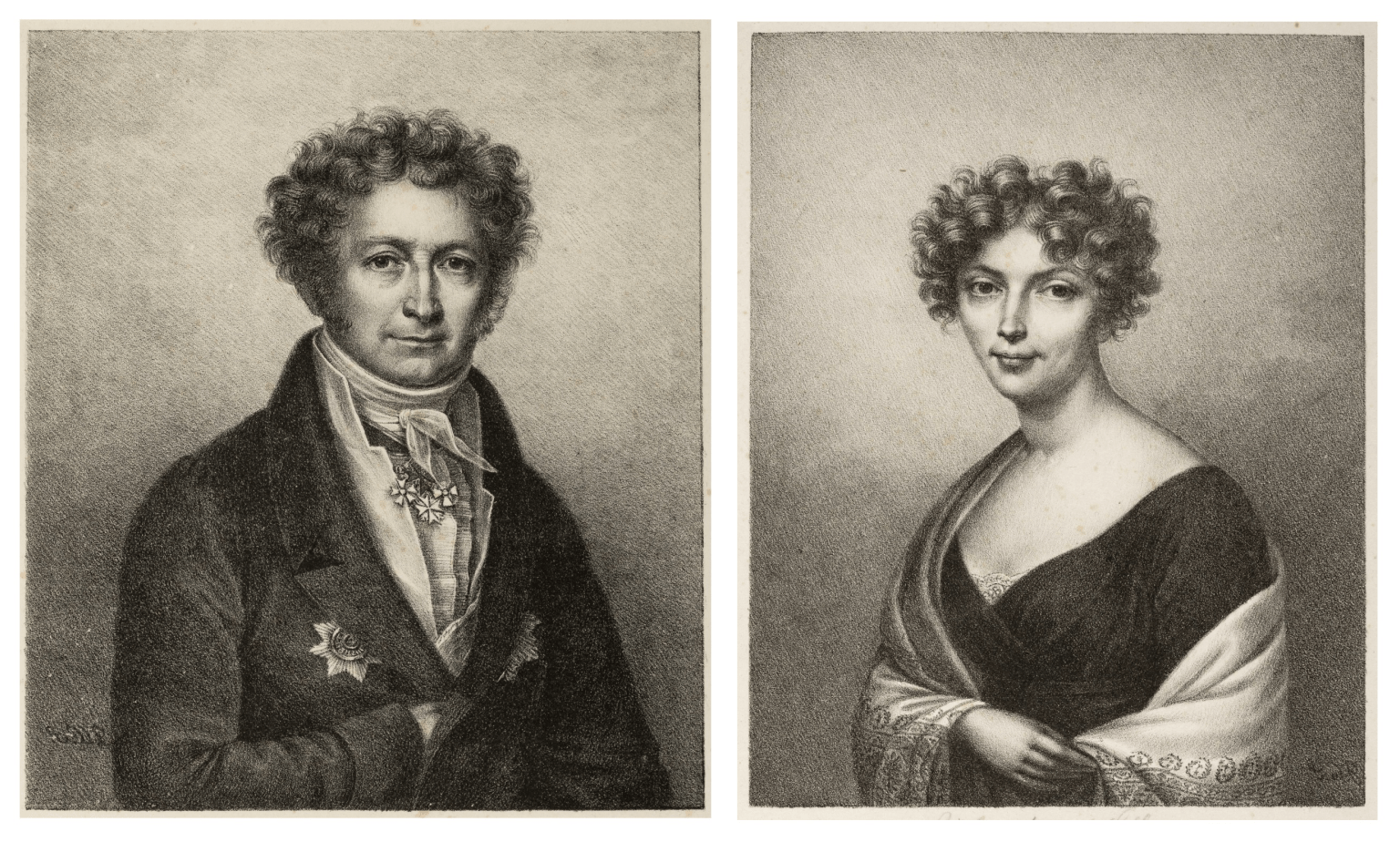
Portrait of Johann Nicolas Heinrich Lichtenstein (1787–1848), a Jelgava doctor, doctor of medicine, head of the Jelgava School of Midwifery, creator and keeper of the natural science collection of the Kurzeme Provincial Museum, and portrait of his wife Laura Wilhelmine Katharina Lichtenstein, née von Heyking (1789–1849).
1847 and 1850. Paper, lithograph.
Lithographed by Ernst David Schabert (1796–1853) in Jelgava.
Portrait of Lichtenstein (1847) lithographed after a drawing by Julius Johann Döring (1818–1898).
Provenance: Inherited from Dome Museum.
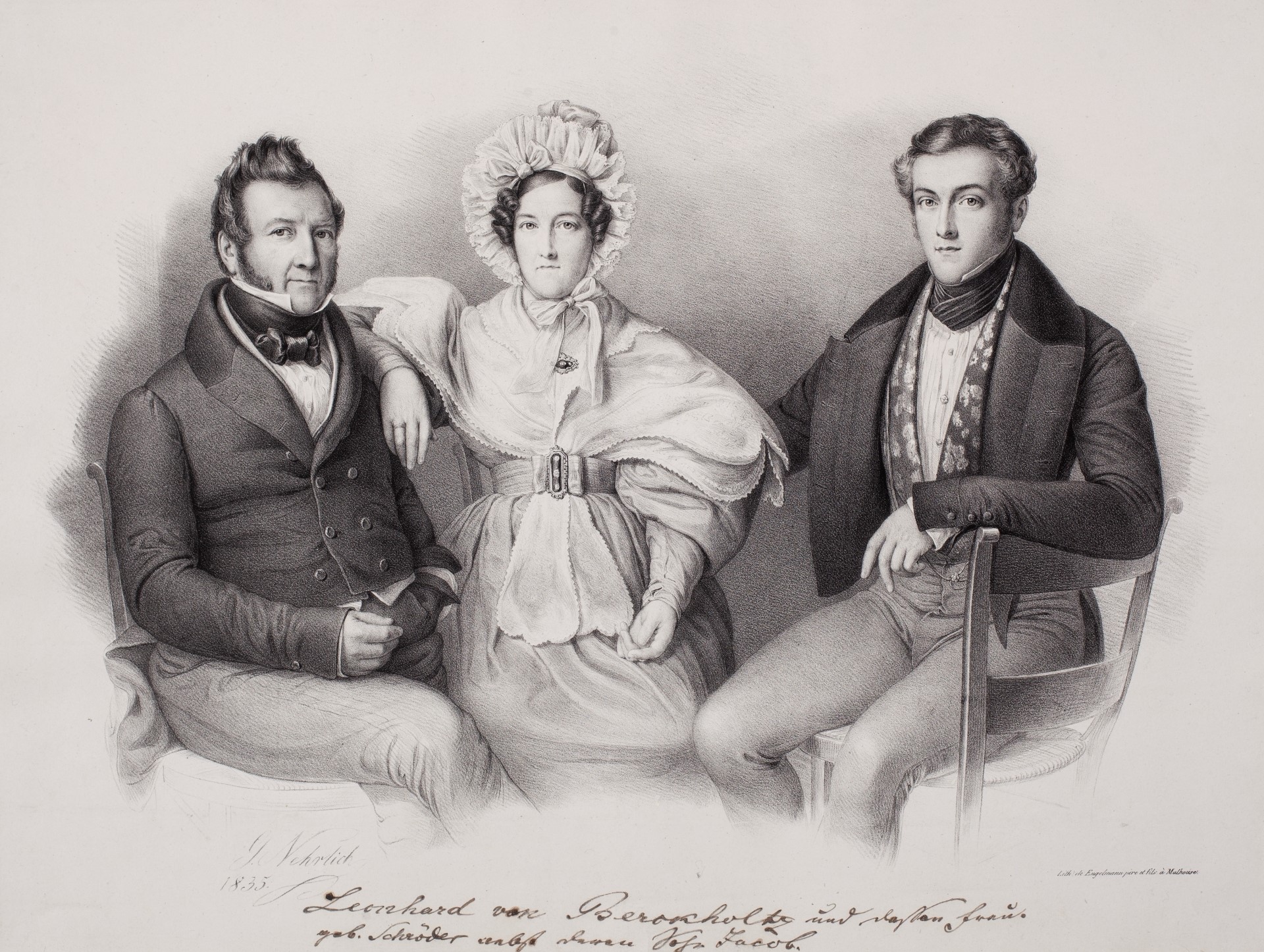
Portrait of Riga merchant, Baron Gabriel Leonhard von Berckholtz (1781–1863), his wife Barbara von Berckholtz, née Schröder (1785–1859) and son Jacob Johann von Berckholtz (1815–1887).
1835. Paper, lithograph.
Lithographed by Gottfried (Godefroy) Engelmann (1788–1839) in Paris, after a drawing by Gustav Nehrlich (1807–1840?).
Provenance: Inherited from Dome Museum.
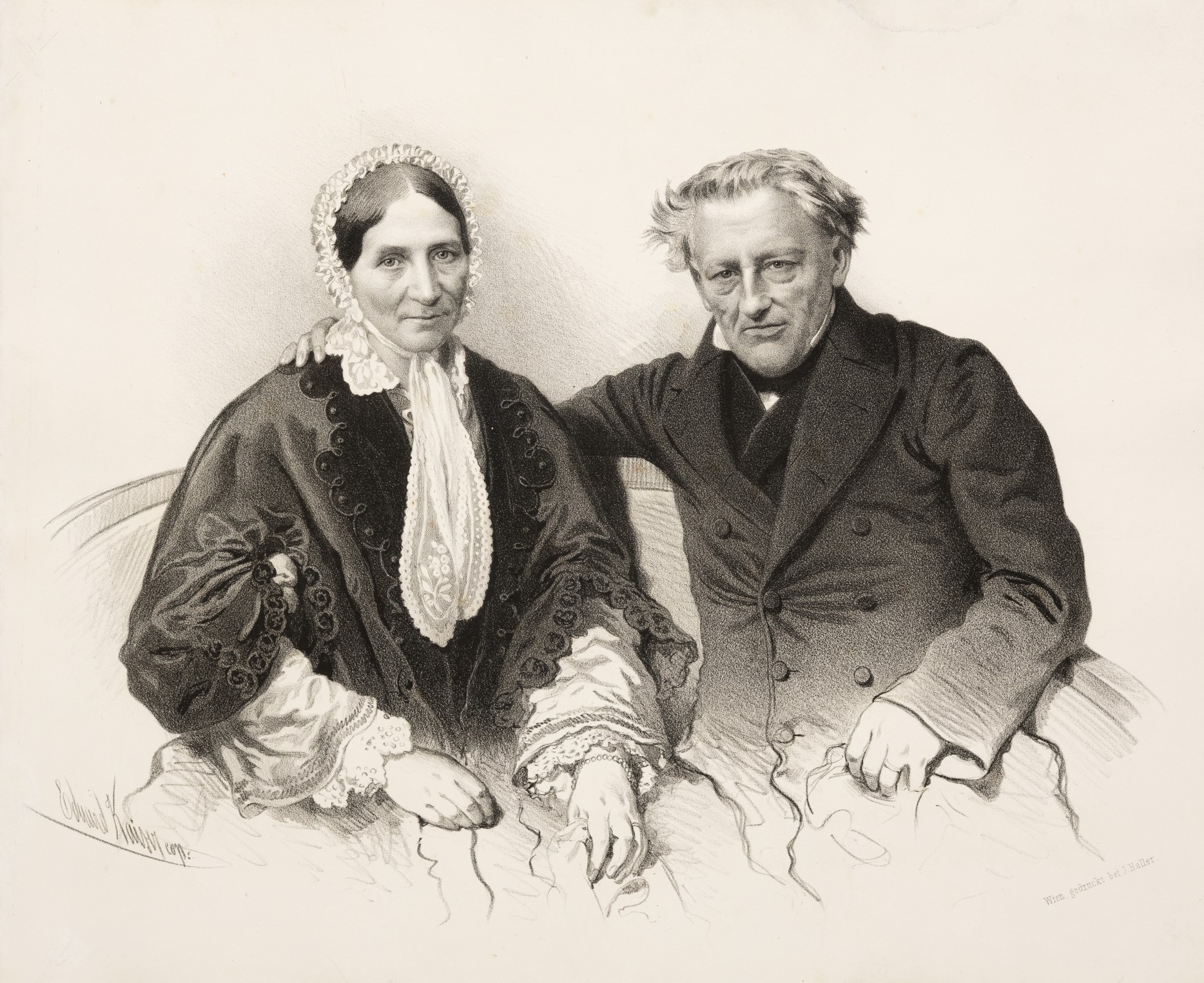
Portrait of the educator, founder and long-standing director of the Bērzaine Gymnasium, Albert Woldemar Hollander (1796–1868) and his wife Charlotte Dorothea Hollander, née Rathlef (1803–1882).
Mid-19th c. Paper, lithograph.
Lithographed by Johann Haller in Vienna after a drawing by Eduard Kaiser (1820–1895).
Provenance: Inherited from Dome Museum.
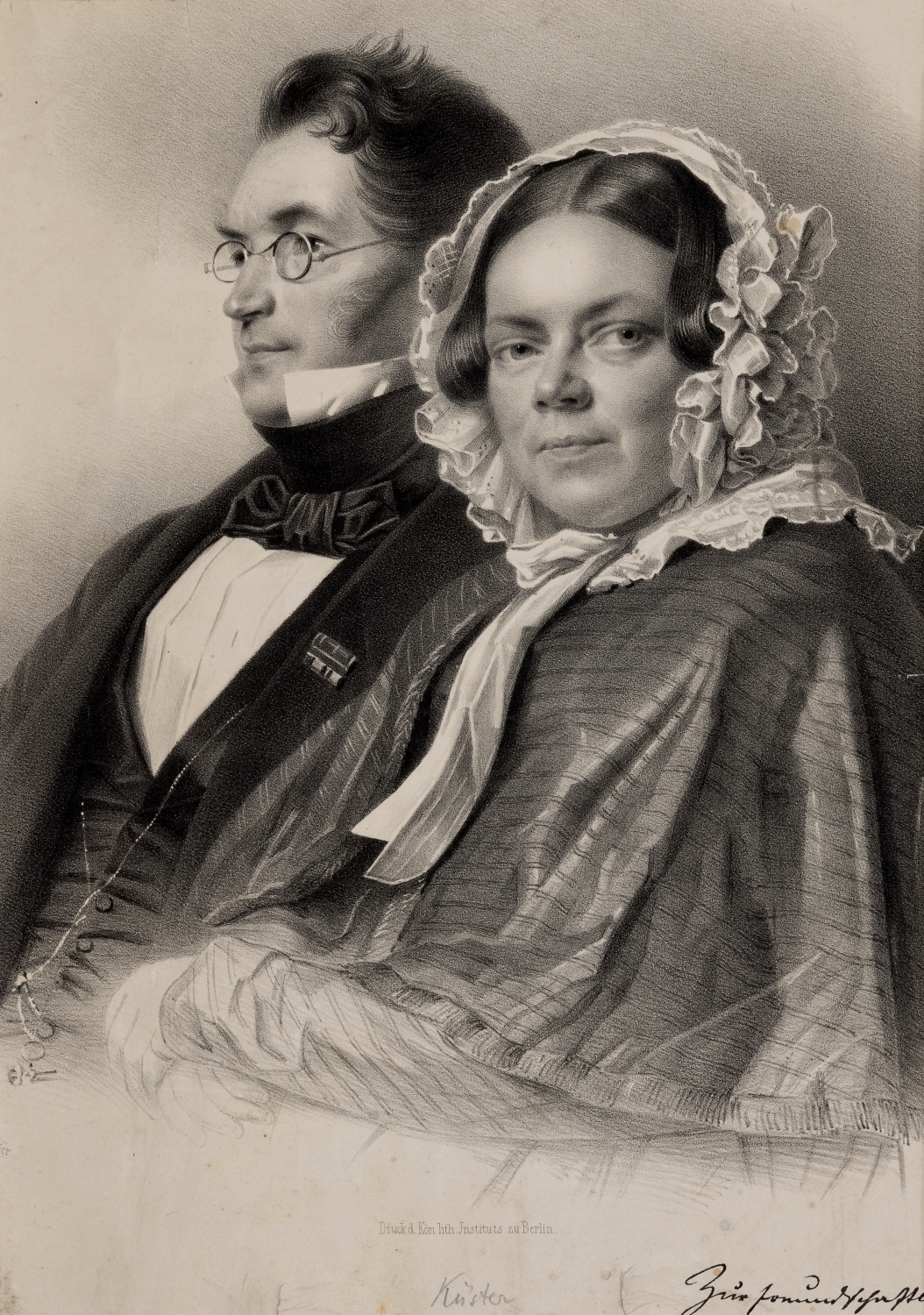
Portrait of naturalist and diplomat Baron Carl von Küster (1820–1893), and portrait of his wife Lilla Caroline Therese Julie von Küster, née Löwe (1818–1908).
1845. Paper, lithograph.
Lithographed by Friedrich Oldermann (1802–1874) after a drawing by Franz Krüger (1797–1857). Printed at the Royal Lithography Institute, Berlin.
Provenance: Inherited from Dome Museum.
Baron Carl vo Küster was born in St. Petersburg and from the age of seventeen he made a career in the diplomatic service. At the time when the current portrait was created, he studied natural sciences at the University of Giessen, where he received his doctorate in 1846. In 1844, he married Lilla Löwe, a German actress born in Leipzig, from the famous Löwe family – theatre actors. Her acting career had begun at the age of fifteen on the stage of the theatre in Mannheim and later continued with great success in the theatre of St. Petersburg. After marrying Von Küster, she left the stage. In 1845, when the couple’s portrait was created, their first son, Eugen von Küster (1845-1872), was born.
Carl von Küster continued the diplomatic service, in 1857–1864 also held the position of the director of the St. Petersburg Botanical Garden, while later, 1875–1881 headed the St. Petersburg Theatre.
By the late 19th century and thereafter, the commissioning of portrait paintings executed in oil had become increasingly accessible to the local middle class. Within privately commissioned portraits of couples, the tradition of producing portrait diptychs persisted well into the subsequent decades.
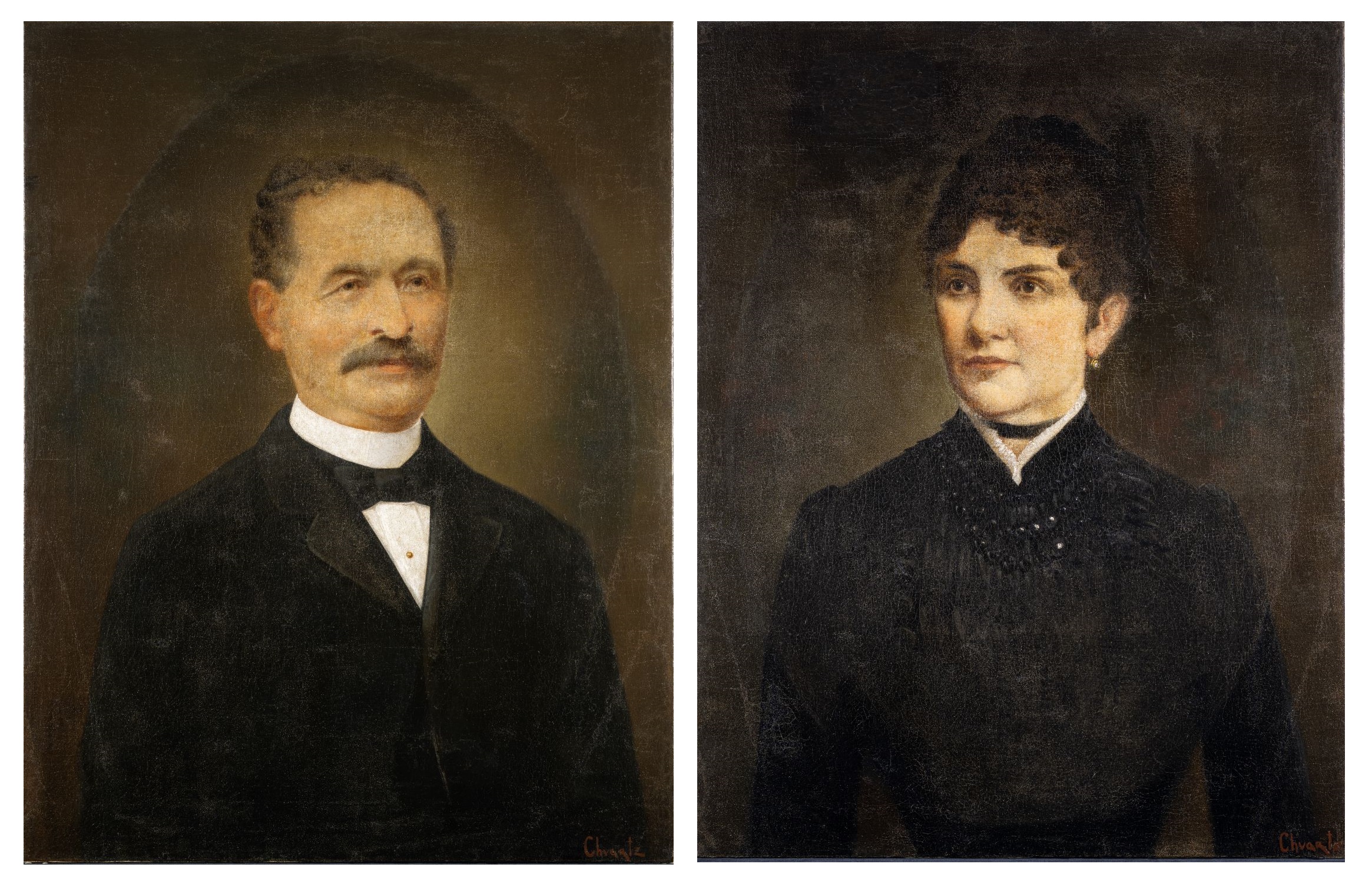
Portrait of an unknown man and portrait of an unknown woman.
Late 19th c. Oil on canvas.
Unknown author: [Chvartz].
Provenance: Acquisition in 2003 from the Riga Customs Regional Authority.
There is no information about the two persons portrayed in these paintings. The formal similarity of the two paintings, the common authorship, as well as the depiction of the persons in a ¾-turn angle towards each other, suggest that the paintings portray a couple.
When the paintings were taken into the museum’s collection, their state of preservation was extremely poor: the paintings had been removed from the wooden wedge frames, rolled up, deformed. The technical restoration of both paintings in the museum was carried out by restorer Rita Plaude (1931–2020) in 2005, while in 2023–2024, while preparing the paintings for exhibition, the restoration was continued by restorer Ineta Augustina.
The identity of the persons depicted in the paintings remains unclear.
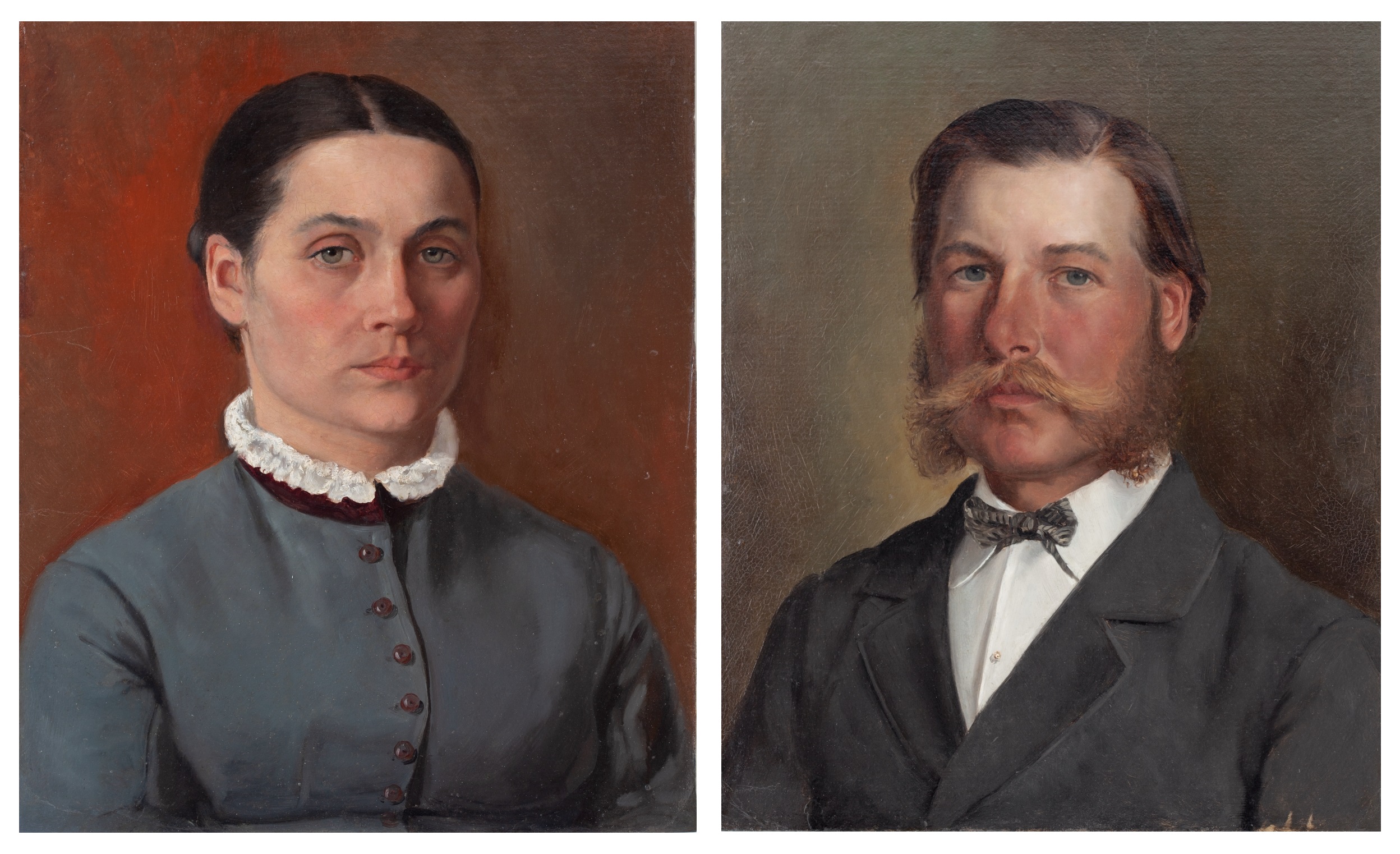
Portrait of Kristaps Bergs (1843–1907), the co-founder of the Latvian Society of Riga, a construction developer and landlord, and the portrait of his wife, Šarlote Berga, née Balode (1854–1928), head of Riga Latvian Charity Society School.
Late 1870s. Oil on cardboard.
Unknown author.
Provenance: Acquisition in 1996 from the administration of the Riga Latvian Society House.
The portraits of the Bergs couple were incorporated in the collection of the Museum of the History of Riga and Navigation in 1996 as portraits of an unknown man and an unknown woman. The portraits painted on cardboard were unframed and had been stored in unsuitable conditions.
In 2018, when the museum’s restorer Ineta Augustina carried out the restoration of both paintings, the identity of the two depicted persons was discovered by attempting to identify the person depicted in the portrait of a man in one of the portrait images of members of the Latvian Society of Riga, based on the likeness.
Having established that the co-founder, spokesperson and head of the Theatre Commission Kristaps Bergs of the Latvian Society of Riga is depicted in the painted man’s portrait, a photographic portrait of the Bergs couple was found to confirm the identity of the persons depicted in both paintings. The attribution of this portrait of the couple has inspired the current exhibition and the choice of theme. This exhibition of couple portraits is the public premiere of the Bergs couple’s portraits.
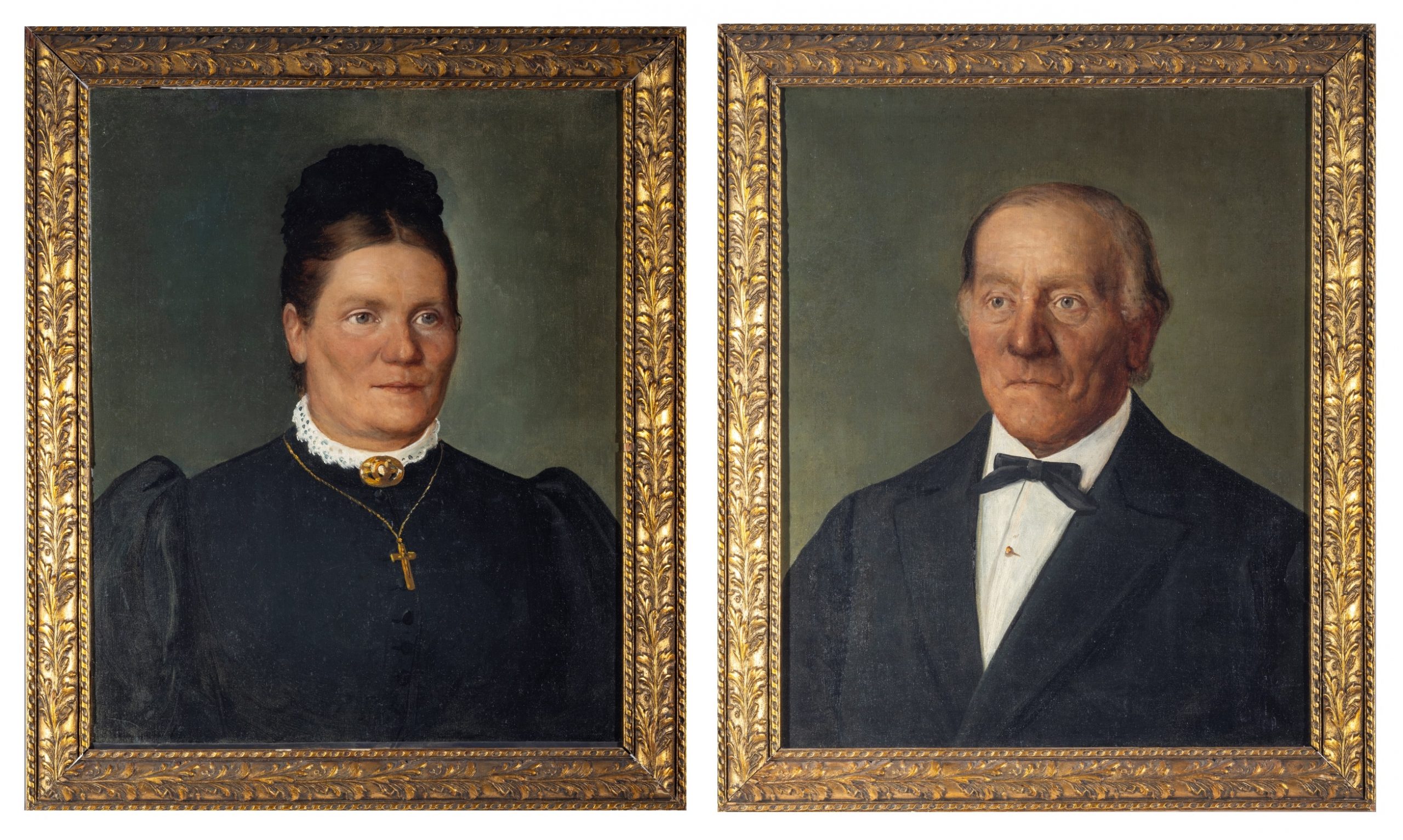
Portrait of Dobele landlord Heinrich Neuhoff and the portrait of his wife Matilde Neuhoff.
Late 1890s. Oil on canvas.
Unknown author.
Provenance: Acquisition in 1982 from a private person.
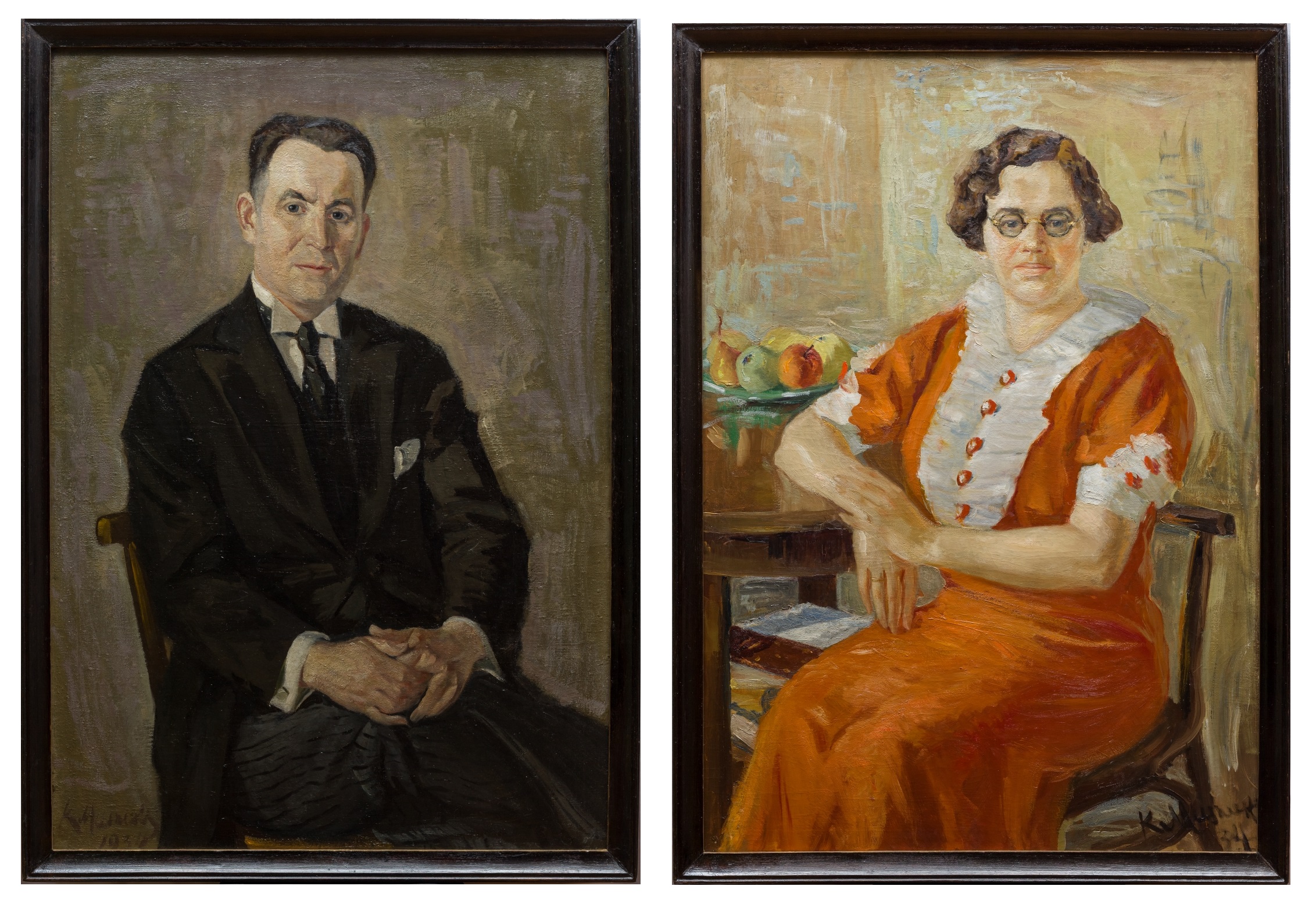
Portrait of furniture manufacturer Jānis Skultāns (1887–1948) and portrait of his first wife Zelma Skultāns (1891–1934).
1934. Oil on canvas.
Author: Kārlis Miesnieks (1887–1977).
Provenance: Acquisition in 1999 from a private person.
It is very likely that the portrait of the furniture manufacturer Jānis Skultāns and the portrait of his first wife Zelma Skultāns were not originally painted as a pair: both paintings were created in 1934, they have a similar format, but different formal qualities and base materials; The portrait of Jānis Skultāns was published separately in the May 1934 issue of the magazine “Atpūta”, while the portrait of Zelma Skultāns was probably painted later – after her death, as a memorial portrait.
These portraits were shown together at the exhibition of the artists’ society “Sadarbs” in October 1934 – just a few months after Zelma Skultāns’ funeral at the Riga Forest Cemetery.
In the review of the exhibition published in the newspaper “Pēdējā Brīdī”, the list of Kārlis Miesnieks’ paintings is concluded by a discreet sentence: “White and red roses are by Mrs. Skultāns portrait.” The comment shows that the public display of her portrait in the context of an art exhibition soon after her death was not taken lightly by the local public at the time.
Meanwhile, the member of “Sadarbs” Jūlijs Madernieks (1870–1955), being a business partner of Jānis Skultāns, the author of the design of the furniture produced in Skultāns’ company and the design author of his wife’s gravestone, commented on the fact of the exhibition of these paintings in the newspaper “Jaunākās Ziņas” as follows: “Portrait paintings by Kārlis Miesnieks are lively and attractive. It is encouraging to see that there is a desire in our society to use the services of real artists. The portraits of the manufacturer Skultāns’ family […] should be mentioned here.”
The portrait of Jānis Skultāns was commissioned to represent his social status as a successful businessman, while the commission of his wife’s portrait most likely followed later – to honour her memory, or rather as the representation of the married couple’s relationship status in public.
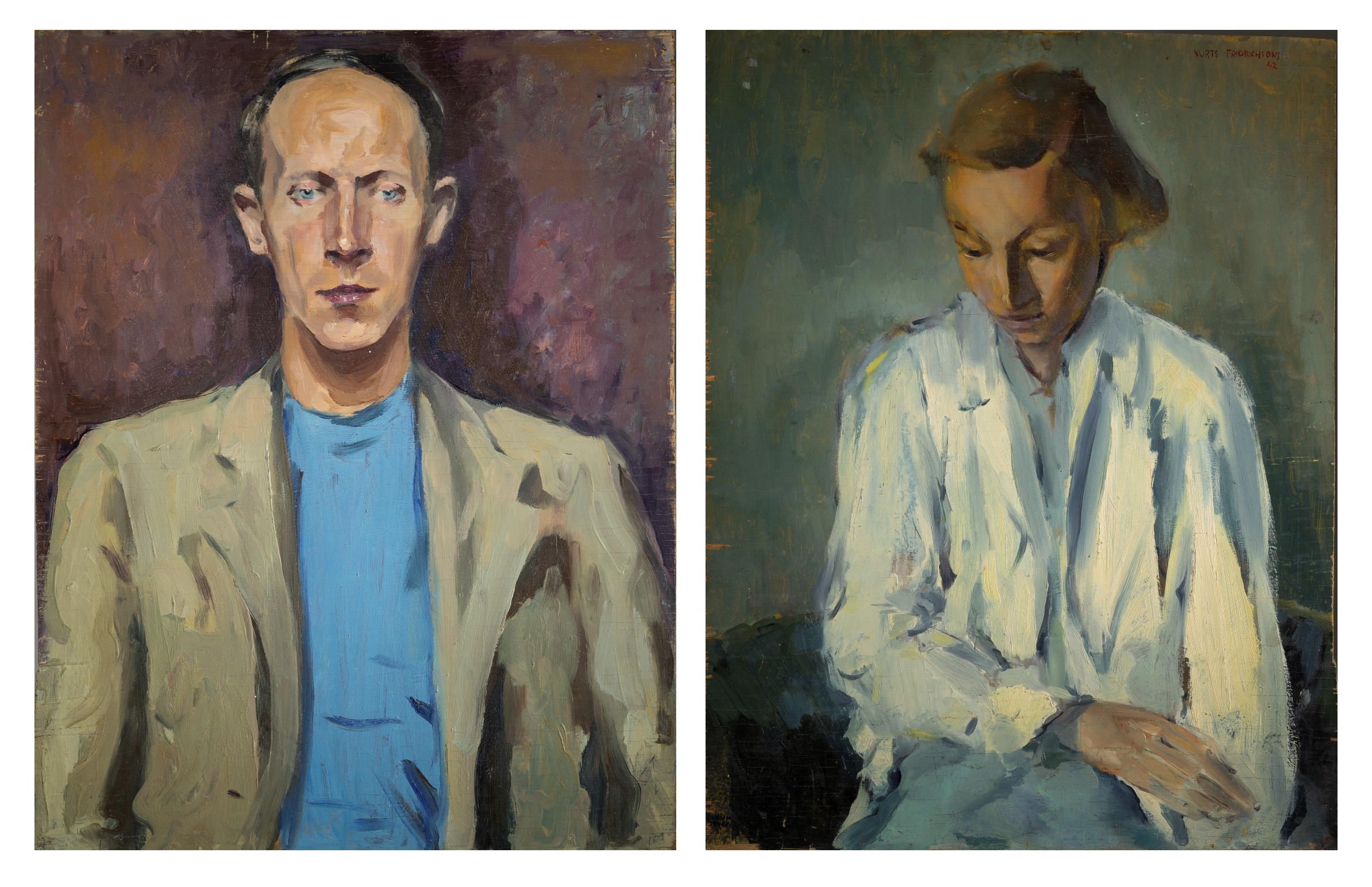
Self-portrait of artist Kurts Heinrihs Fridrihsons (1911–1991) and portrait of his wife Zenta Fridrihsone, née Dedze (1912–2006).
1942. Oil on veneer plywood.
Author: Kurts Heinrihs Fridrihsons.
Provenance: Acquisition in 1998 as a gift from artist Jānis Spalviņš.
The portraits were painted in 1942. The couple married in the autumn of that year. The portraits are executed on both sides of a single support, rendering this diptych not only a conceptually unified work but also a physically inseparable pair of portraits.
The return to silhouette portraits.
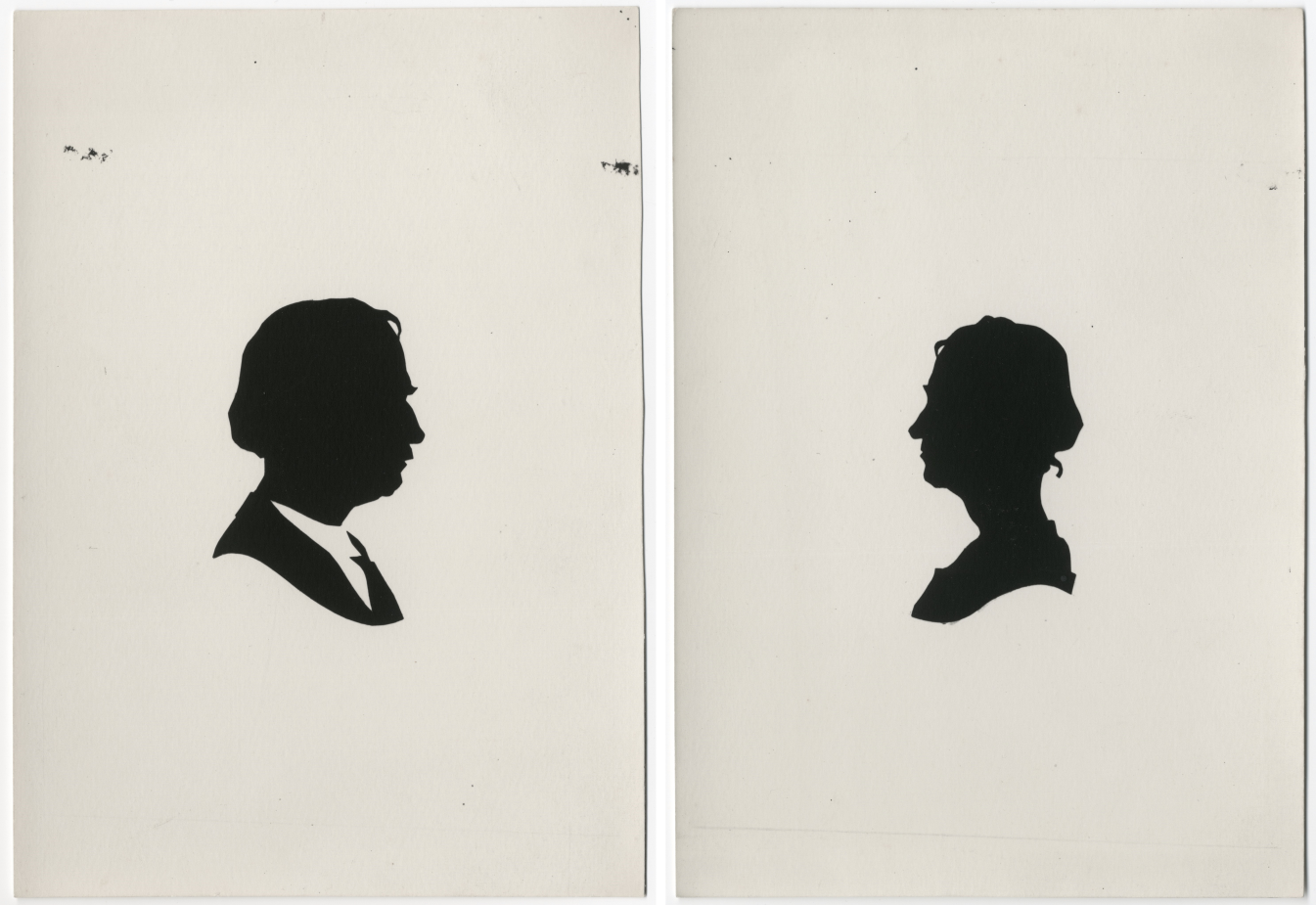
Portraits of architect Edgars Slavietis’ parents – Georgs Slavietis (1869–1948), master painter of the Riga Small Guild, and his wife Minna Slaviete (1878–1973).
1940s. Ink on paper.
Author: Edgars Slavietis (1905–1986).
Provenance: Acquisition in 1992 as a gift from Tatjana Pāvele.
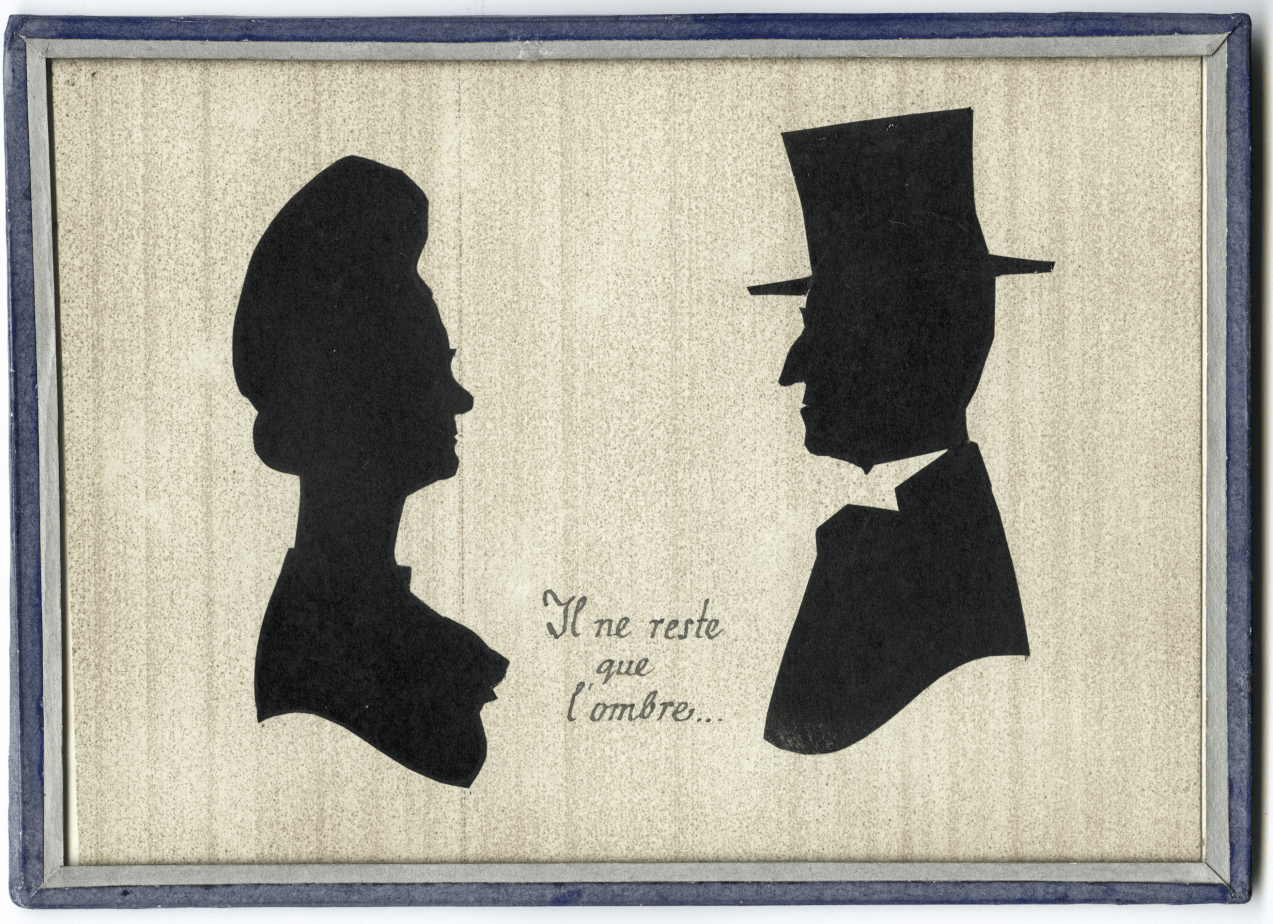
Self-portrait of architect Edgars Slavietis (1905–1986), and portrait of his wife – historian and archaeologist Tatjana Pāvele (1918–2016).
1960s. Paper, appliqué, silhouette cut.
Author: Edgars Slavietis
Provenance: Acquisition in 1992 as a gift from Tatjana Pāvele.
Edgars Slavietis was born in Riga, in the family of the painter Georgs Slavietis, studied architecture in the interwar period, during the Soviet period he was engaged in the restoration of architectural monuments, and from 1959 he headed the restoration of the Riga Dome, adapting the church to the function of a concert hall (the pulpit of the Dome Church, which was built in 1641 for Riga and funded by the donations of the city councillor Ludwig Hintelmann, would probably have been dismantled if the management of these works had not been entrusted to Slavietis).
In his spare time throughout his life, Slavietis liked to create silhouette portraits, authoring portraits of numerous contemporaries with this long-forgotten portrait technique: he made more than fifty silhouette portraits, including the portraits of couples, which were exhibited at the House of Architects in 1976.
Slavietis was married to Tatjana Pāvele, an archaeologist, historian and long-standing employee of the Museum of the History of Riga and Navigation, who during the Soviet period prepared publications on the architectural ensemble of the Riga Dome in French and English, and translated the memoirs and diaries of Mērija Grīnberga (1909–1975) from German.
Slavietis has created a self-portrait and a portrait of his wife as a silhouette cut in appliqué technique, supplementing it with an inscription in French: “Only a shadow remains…”
The portrait exhibition “MATCHING COUPLES” were on display in the Small Exhibition Hall of the Museum from May 10 to November 24, 2024.
Curator and author of the texts: Inga Karlštrēma – Art Collection Manager
Scenographer: Reinis Dzudzilo
Restorers: Ineta Augustina, Olga Bicāne, Jana Lībiete, Anete Strautmane, Elza Albiņa.
Translator: Andra Damberga
Partners: Rundāle Palace Museum, Latvian National Art Museum.
Supporters: Justs Karlsons, SIA “Groglass”; SIA “Kraso”; store “Spilvenu nams” (SIA “Elia Group”); SIA “Arhitektoniskās izpētes grupa”; SIA “Omnium Plus”; AS “Riga Wood Baltic”.